Why Cyber Insurance is Essential for Today's Businesses


Introduction
Every 39 seconds, a cyberattack strikes a business somewhere in the world. Cyber insurance has evolved from a nice-to-have into a critical safeguard for modern businesses. As companies shift operations online and store mountains of sensitive data, cybercriminals have followed suit, developing increasingly sophisticated methods to exploit vulnerabilities. A single data breach can cost organizations millions in recovery expenses, legal fees, regulatory fines, and lost customer trust.
Traditional business insurance policies weren't designed for the digital age. They typically don't cover the unique risks posed by ransomware attacks, phishing schemes, or data breaches. That's where cyber insurance steps in, providing financial protection and expert support when digital disasters strike.
But cyber insurance offers more than just financial compensation. Many policies include proactive services like security assessments, incident response teams, and crisis management support. These resources can mean the difference between a contained incident and a company-ending catastrophe.
The regulatory landscape compounds these risks. With laws like GDPR, CCPA, and HIPAA imposing steep penalties for data mishandling, businesses face potential fines that can reach into the millions. Cyber insurance helps cover these regulatory costs while providing legal guidance through the complex aftermath of a breach.
As cyber threats continue multiplying, protecting your business with comprehensive cyber insurance is essential for survival in today's connected economy.
What is Cyber Insurance?
Cyber insurance, also known as cyber liability insurance or cyber risk insurance, is a specialized form of insurance designed to protect businesses from internet-based risks and more generally from risks relating to information technology infrastructure and activities. As businesses continue to embrace digital transformation, the importance of safeguarding against cyber threats has become paramount. Cyber insurance policies are crafted to cover a range of liabilities, including data breaches, network damage, and other cyber incidents that could lead to financial losses.
The scope of cyber insurance is broad, encompassing various facets of a business's digital operations. Policies can cover the costs associated with the recovery from a data breach, including legal fees, notification costs, and even public relations expenses to manage the fallout. In addition to these immediate costs, cyber insurance can also provide coverage for business interruption losses, helping companies maintain financial stability in the wake of a cyber incident.
Furthermore, cyber insurance isn't just about financial reimbursement. Many insurance providers offer a suite of services to help businesses proactively manage their cyber risk. This can include access to cybersecurity experts, risk assessments, and employee training programs. By integrating these services, cyber insurance becomes a comprehensive solution to manage and mitigate the myriad of cyber threats facing businesses today.
The Increasing Threat of Cyber Attacks
Cyber attacks are becoming increasingly sophisticated and prevalent, posing significant threats to businesses of all sizes. The rise of digitalization has opened new avenues for cybercriminals to exploit, making it crucial for businesses to stay vigilant. From ransomware attacks that lock critical data until a ransom is paid, to phishing schemes that trick employees into divulging sensitive information, the spectrum of cyber threats is vast and continually evolving.
One of the primary drivers behind the surge in cyber attacks is the growing value of data. Personal information, financial records, and intellectual property are lucrative targets for cybercriminals who can sell this data on the dark web or use it to commit fraud. The COVID-19 pandemic further exacerbated the situation as businesses rapidly shifted to remote work, often without adequate cybersecurity measures in place. This shift created new vulnerabilities that cybercriminals were quick to exploit.
The financial impact of cyber attacks can be staggering. According to a report by IBM, the average cost of a data breach in 2020 was $3.86 million. For small and medium-sized enterprises (SMEs), the financial toll can be catastrophic, potentially leading to business closure. In addition to direct financial losses, businesses may also suffer reputational damage, loss of customer trust, and legal penalties. The increasing threat landscape underscores the need for robust cybersecurity measures, including the adoption of cyber insurance.
Key Benefits of Cyber Insurance for Businesses
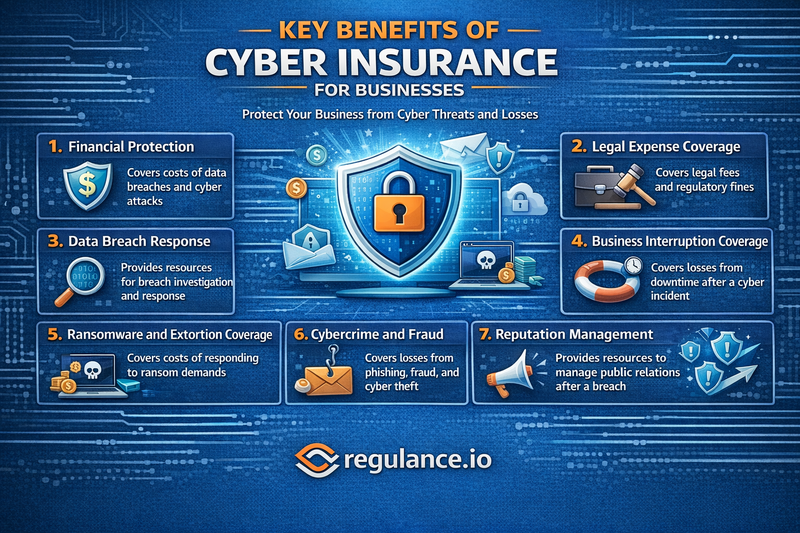
Financial protection: In the event of a cyber incident, the costs can quickly escalate. Cyber insurance can cover a wide range of expenses, including legal fees, forensic investigations, customer notification, and even the costs associated with restoring lost data. This financial safety net can be crucial for businesses, particularly smaller ones that may not have the resources to absorb such losses.
Risk management support: Many insurance providers offer additional services that go beyond financial reimbursement. These can include access to cybersecurity experts who can help identify vulnerabilities, provide recommendations for improving security measures, and assist in developing incident response plans. By leveraging these resources, businesses can enhance their overall cybersecurity posture and reduce the likelihood of a successful cyber attack.
Maintaining business continuity: In the event of a cyber incident, the ability to resume operations quickly is essential. Cyber insurance policies often include coverage for business interruption losses, ensuring that a company's financial health is protected while it works to restore normal operations. This aspect of cyber insurance is particularly important for businesses that rely heavily on digital operations, as even a short period of downtime can have significant financial implications.
Common Cyber Insurance Policies Explained
Cyber insurance policies can vary widely, but they generally fall into two main categories: first-party coverage and third-party coverage.
First-party coverage deals with the direct losses a business incurs as a result of a cyber incident. This can include costs related to data recovery, business interruption, and customer notification. For example, if a ransomware attack locks your company's data, first-party coverage would help cover the costs of decrypting the data and restoring your systems.
Third-party coverage, on the other hand, deals with claims made against your business by external parties. This could include customers, partners, or regulatory bodies who suffer losses or damages as a result of a cyber incident involving your company. Third-party coverage can help cover legal fees, settlements, and other costs associated with defending against these claims. For instance, if a customer's personal information is compromised in a data breach, third-party coverage would assist in covering the legal costs and any potential settlements.
In addition to these primary categories, many cyber insurance policies offer additional coverages tailored to specific risks. These can include coverage for social engineering attacks, where employees are tricked into transferring funds to fraudulent accounts, and coverage for reputational damage, helping to manage the public relations fallout from a cyber incident. By understanding the various types of coverage available, businesses can tailor their cyber insurance policies to meet their unique needs and risk profiles.
Factors to Consider When Choosing Cyber Insurance
Scope of coverage: It's essential to understand what is included and excluded in a policy. For example, some policies may cover only certain types of cyber incidents, such as data breaches, while excluding others like social engineering attacks. Businesses should conduct a thorough risk assessment to identify their specific vulnerabilities and ensure that their chosen policy provides comprehensive coverage.
The policy limits and sub-limits: Policy limits refer to the maximum amount an insurer will pay for a covered loss, while sub-limits apply to specific types of coverage within the policy. For instance, a policy might have a $1 million limit for overall coverage but only a $100,000 sub-limit for business interruption losses. Understanding these limits is crucial to ensure that the policy will provide adequate financial protection in the event of a significant cyber incident.
Cost: While it's tempting to opt for the cheapest policy available, this approach can backfire if the coverage is insufficient. It's essential to balance cost with coverage quality. Additionally, businesses should consider the insurer's reputation and claims process. A policy is only as good as the insurer's ability to pay claims promptly and efficiently. Researching the insurer's financial stability, customer reviews, and claims handling process can provide valuable insights into their reliability.
How Cyber Insurance Can Mitigate Financial Risks
Cyber insurance serves as a crucial financial safety net, helping businesses manage the financial risks associated with cyber incidents. One of the primary ways it does this is by covering the direct costs of a cyber event. This can include expenses related to data recovery, legal fees, regulatory fines, and even ransom payments in the case of a ransomware attack. By covering these costs, cyber insurance helps businesses avoid the financial strain that could otherwise jeopardize their operations.
In addition to direct costs, cyber insurance can also mitigate financial risks by covering business interruption losses. Cyber incidents can disrupt normal business operations, leading to lost revenue and additional expenses. For example, if a company's e-commerce platform is taken offline by a cyber attack, the resulting loss in sales can be substantial. Cyber insurance can provide compensation for these losses, helping businesses maintain financial stability while they work to restore their operations.
Furthermore, cyber insurance can help manage the long-term financial impact of a cyber incident. Beyond the immediate costs, businesses may face ongoing expenses related to reputational damage and customer attrition. A well-crafted cyber insurance policy can include coverage for public relations efforts and customer notification costs, helping to rebuild trust and retain customers. By addressing both the immediate and long-term financial risks, cyber insurance provides a comprehensive solution for managing the financial fallout of cyber incidents.
Real-Life Case Studies: Businesses Saved by Cyber Insurance
To understand the real-world impact of cyber insurance, consider the case of a mid-sized retail company that fell victim to a ransomware attack. The attackers encrypted the company's data and demanded a substantial ransom for its release. Thanks to their cyber insurance policy, the company was able to cover the ransom payment, as well as the costs associated with data recovery and system restoration. Without this coverage, the financial burden could have been devastating, potentially leading to business closure.
Another compelling example involves a healthcare provider that experienced a significant data breach. Sensitive patient information was compromised, leading to potential legal and regulatory repercussions. The healthcare provider's cyber insurance policy covered the legal fees, regulatory fines, and customer notification costs, allowing the company to navigate the crisis without severe financial strain. The policy also provided access to cybersecurity experts who helped the provider strengthen their security measures to prevent future incidents.
In yet another case, a financial services firm suffered a phishing attack that resulted in the unauthorized transfer of funds. The firm's cyber insurance policy included coverage for social engineering attacks, which allowed them to recover the lost funds. Additionally, the policy covered the costs of forensic investigations and legal fees, helping the firm address the incident comprehensively. These real-life examples illustrate the tangible benefits of cyber insurance and underscore its importance in today's digital landscape.
The Role of Cyber Insurance in Compliance and Regulations
Compliance with data protection regulations is a critical consideration for businesses operating in today's digital environment. Regulations such as the General Data Protection Regulation (GDPR) in Europe and the California Consumer Privacy Act (CCPA) in the United States impose stringent requirements on businesses to protect personal data. Non-compliance can result in substantial fines and legal penalties. Cyber insurance can play a vital role in helping businesses navigate these regulatory landscapes.
One of the ways cyber insurance supports compliance is by covering the costs associated with regulatory investigations and fines. In the event of a data breach, regulatory bodies may launch investigations to determine if the business complied with data protection laws. These investigations can be costly and time-consuming. Cyber insurance can cover legal fees, fines, and other expenses related to regulatory compliance, helping businesses manage the financial impact of these investigations.
Additionally, many cyber insurance policies offer risk management services that can help businesses maintain compliance with data protection regulations. These services can include risk assessments, employee training programs, and access to cybersecurity experts who can provide guidance on best practices for data protection. By leveraging these resources, businesses can enhance their compliance efforts and reduce the risk of regulatory penalties. Cyber insurance thus serves as both a financial safety net and a proactive tool for regulatory compliance.
Future Trends in Cyber Insurance
As the digital landscape continues to evolve, so too does the field of cyber insurance. One of the emerging trends is the increasing customization of cyber insurance policies. Businesses are recognizing that a one-size-fits-all approach to cyber insurance is insufficient to address their unique risks and needs. Insurers are responding by offering more tailored policies that can be customized to fit the specific risk profiles of individual businesses. This trend is likely to continue, providing businesses with more flexible and comprehensive coverage options.
Another significant trend is the integration of advanced technologies into cyber insurance offerings. Insurers are leveraging technologies such as artificial intelligence (AI) and machine learning to improve risk assessment and underwriting processes. These technologies can analyze vast amounts of data to identify patterns and predict potential cyber threats, enabling insurers to offer more accurate and competitive premiums. For businesses, this means access to more sophisticated and data-driven insurance solutions that can better protect against evolving cyber threats.
The growing focus on preventive measures is also shaping the future of cyber insurance. Insurers are increasingly emphasizing the importance of proactive risk management and offering services that help businesses strengthen their cybersecurity defenses. This can include access to cybersecurity experts, regular risk assessments, and employee training programs. By prioritizing prevention, insurers and businesses can work together to reduce the likelihood of successful cyber attacks and mitigate their impact when they do occur. This collaborative approach is set to become a cornerstone of the cyber insurance landscape.
Conclusion
In today's digital age, where cyber threats are ever-present and increasingly sophisticated, investing in cyber insurance is essential for business resilience. Cyber insurance provides a comprehensive safety net that can cover the financial costs of cyber incidents, support compliance with data protection regulations, and offer valuable risk management resources. By integrating cyber insurance into their overall cybersecurity strategy, businesses can better navigate the complexities of the digital landscape and protect themselves from the potentially devastating impact of cyber threats.
The benefits of cyber insurance extend beyond financial protection. The support and resources offered by insurers can help businesses enhance their cybersecurity posture, reduce vulnerabilities, and respond more effectively to cyber incidents. This proactive approach to risk management is crucial in an environment where cyber threats are constantly evolving. By investing in cyber insurance, businesses can not only safeguard their financial health but also build a more resilient and secure future.
Ultimately, cyber insurance is a vital component of a comprehensive cybersecurity strategy. It provides the financial support and resources needed to manage and mitigate the risks associated with cyber threats. As the digital landscape continues to evolve, businesses must remain vigilant and proactive in protecting their digital assets. Investing in cyber insurance is a critical step in this journey, ensuring that businesses are well-equipped to thrive amid the uncertainties of the digital age.
Contact Regulance today to schedule a comprehensive security assessment and take the first step toward a more secure future.