What Is Phishing and Why Is It a Cybersecurity Risk for Your Business? Here’s How to Prevent It

Introduction
Every day, millions of emails flood into business inboxes around the world. Most are legitimate, but hidden among them are carefully crafted messages designed to trick, steal, and compromise. These deceptive communications represent one of the most pervasive cybersecurity threats facing organizations today: phishing attacks.
The statistics paint a sobering picture. Phishing attacks account for over 80% of reported security incidents, costing businesses billions of dollars annually in direct losses, remediation costs, and reputational damage. What makes phishing particularly dangerous is its evolving sophistication and its exploitation of the weakest link in any security system, human psychology.
For business owners, managers, and employees alike, understanding phishing entails safeguarding your company's financial health, maintaining customer trust, ensuring regulatory compliance, and preserving your brand reputation in an increasingly digital marketplace. If you're running a small startup or managing an enterprise corporation, phishing poses a real and present danger that demands your attention.
This article will walk you through everything you need to know about phishing: what it is, how it works, the various forms it takes, and most importantly, how to protect your business from becoming another statistic in the growing catalog of cybersecurity breaches.
What is Phishing?
Phishing is a type of cyberattack where criminals masquerade as trustworthy entities to deceive individuals into revealing sensitive information, downloading malware, or performing actions that compromise security. The term "phishing" is derived from "fishing", attackers cast out bait in the form of fraudulent communications, hoping someone will bite.
Phishing exploits human trust and urgency rather than technical vulnerabilities. Instead of breaking through firewalls or cracking encryption codes, phishing attackers manipulate people into voluntarily handing over passwords, credit card numbers, financial data, or access credentials. They might impersonate your bank, a colleague, a vendor, or even a government agency to achieve their goals.
These attacks typically arrive via email, but modern phishing has expanded across multiple channels including text messages, social media, phone calls, and even fake websites that perfectly mimic legitimate ones. The common thread is deception, creating a convincing scenario that prompts the target to act without thinking critically about the request.
What makes phishing particularly insidious is its low barrier to entry for criminals. Unlike sophisticated hacking techniques that require advanced technical skills, phishing can be executed with basic tools and templates readily available on the dark web. This accessibility has led to an explosion of phishing attempts, with attackers constantly refining their techniques to bypass security measures and exploit current events, seasonal trends, or organizational changes.
The cybersecurity landscape has evolved dramatically, and phishing has evolved with it. Today's phishing attacks are highly targeted, personalized, and convincing enough to fool even security-aware individuals. Understanding this threat is the first step toward building effective defenses for your business.
Types of Phishing
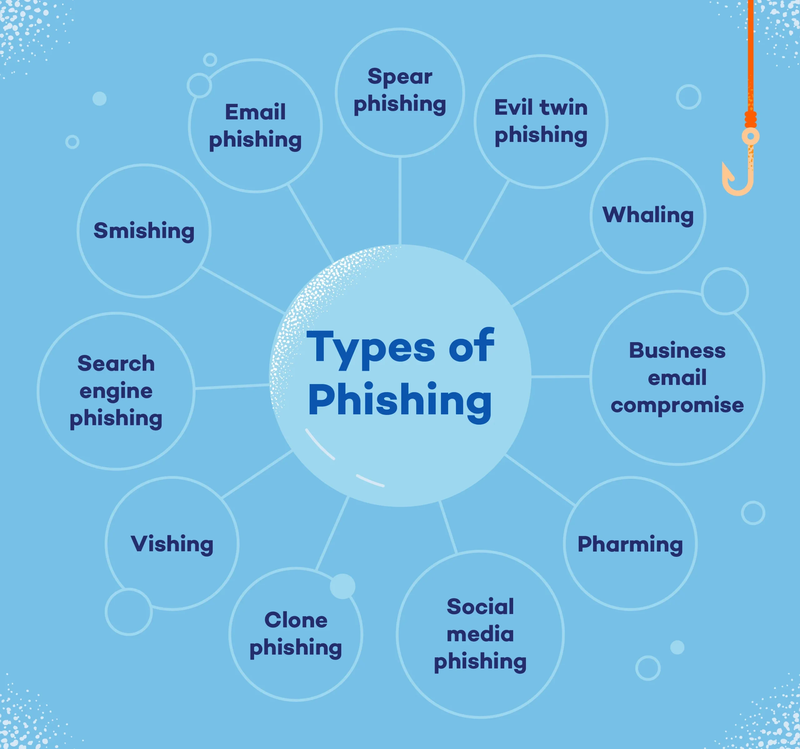
Cybercriminals have developed numerous variations, each tailored to different targets and objectives. Recognizing these different types helps you identify threats more effectively.
Email Phishing
The most common and traditional form, email phishing involves sending fraudulent emails to large groups of recipients. These messages often impersonate well-known companies, financial institutions, or service providers. The emails typically contain urgent calls to action, "Your account has been compromised," "Verify your identity immediately," or "Claim your refund now" designed to create panic and prompt hasty responses. Links in these emails lead to fake websites that harvest credentials, while attachments may contain malware.
Spear Phishing
Unlike broad email phishing campaigns, spear phishing targets specific individuals or organizations with customized messages. Attackers research their victims through social media, company websites, and public records to craft highly personalized communications. A spear phishing email might reference recent projects, name colleagues, or mention company-specific information to appear legitimate. This personalization makes these attacks significantly more dangerous and successful than generic phishing attempts.
Whaling
Whaling attacks target high-value individuals such as CEOs, CFOs, or other executives, the "big fish" in an organization. These sophisticated attacks often involve impersonating board members, legal authorities, or business partners to request wire transfers, tax information, or confidential business data. The stakes are dramatically higher, as executives typically have access to sensitive company information and financial authorization powers.
Smishing (SMS Phishing)
Smishing uses text messages to deliver phishing attacks. These messages often appear to come from delivery services, banks, or government agencies, containing links to malicious websites or phone numbers that connect to scammers. With people generally trusting text messages more than emails, smishing has proven particularly effective, especially as mobile device usage continues to dominate.
Vishing (Voice Phishing)
Vishing involves phone calls where attackers impersonate legitimate organizations to extract information or convince victims to perform certain actions. These callers might claim to be from tech support, the IRS, or your bank, creating urgent scenarios that demand immediate action. The personal nature of phone conversations can be especially persuasive, particularly when attackers use sophisticated spoofing techniques to display legitimate-looking caller IDs.
Clone Phishing
In clone phishing, attackers create nearly identical copies of legitimate emails that victims have previously received, replacing genuine links or attachments with malicious ones. Because the email looks familiar and references a real previous communication, recipients are more likely to trust and interact with the content.
Business Email Compromise (BEC)
BEC attacks involve compromising or spoofing legitimate business email accounts to conduct unauthorized transfers of funds or data. An attacker might hack into a CEO's email account or create a nearly identical spoofed address to instruct finance departments to wire money to fraudulent accounts. These attacks have resulted in billions of dollars in losses worldwide.
How Phishing Affects Your Business
The impact of phishing on businesses extends far beyond the immediate incident. Understanding these consequences underscores why robust cybersecurity measures are essential investments rather than optional expenses.
Financial Losses
The most immediate and measurable impact comes in the form of direct financial losses. When employees fall for phishing scams, businesses may experience unauthorized wire transfers, fraudulent purchases, stolen funds, or ransomware payments. Beyond these direct thefts, companies face substantial costs for incident response, forensic investigations, system remediation, legal fees, and potential regulatory fines. Small and medium-sized businesses are particularly vulnerable, as a single successful attack can be financially devastating.
Data Breaches
Phishing serves as the primary entry point for many data breaches. Once attackers obtain credentials through phishing, they can access customer databases, intellectual property, financial records, employee information, and proprietary business data. The theft of this information can lead to identity theft for customers, industrial espionage, competitive disadvantage, and massive liability issues. Data breach notification requirements and remediation efforts can cost millions of dollars.
Operational Disruption
Successful phishing attacks often lead to significant operational disruptions. Ransomware deployed through phishing emails can shut down entire networks, forcing businesses offline for days or weeks. Even investigating and containing a phishing incident requires diverting IT resources from productive work to emergency response. The resulting downtime affects productivity, delays projects, disrupts customer service, and can halt revenue-generating activities entirely.
Reputational Damage
Perhaps the most enduring impact comes from reputational harm. When customers learn that their data has been compromised due to a phishing attack, trust evaporates rapidly. Negative publicity, social media backlash, and loss of customer confidence can persist long after the technical aspects of the breach are resolved. Potential clients may choose competitors perceived as more secure, and existing customers may defect to alternatives. Rebuilding reputation requires years of consistent effort and transparent communication.
Legal and Regulatory Consequences
Businesses that experience phishing-related breaches may face legal action from affected parties and regulatory penalties for failing to protect sensitive information adequately. Compliance frameworks like GDPR, HIPAA, PCI-DSS, and others impose strict requirements for data protection, with substantial fines for violations. Class-action lawsuits from compromised customers add another layer of legal and financial complexity.
Employee Morale and Productivity
The psychological impact on employees who fall victim to phishing shouldn't be underestimated. Guilt, embarrassment, and fear of consequences can affect morale and productivity. Additionally, the increased scrutiny and security procedures implemented after an incident can create a stressful work environment and slow down legitimate business processes.
Phishing Tactics Every Business Should Know
Understanding the specific tactics phishing attackers employ helps employees recognize and avoid these threats. Awareness of these common techniques creates a human firewall that complements technical security measures.
Creating Urgency and Fear
Phishing messages frequently manufacture urgent situations requiring immediate action. "Your account will be suspended in 24 hours," "Unusual activity detected," or "Immediate response required" are designed to bypass rational thinking and prompt impulsive responses. This urgency prevents victims from carefully examining the message or consulting with IT departments.
Impersonating Authority Figures
Attackers commonly impersonate executives, IT administrators, government officials, or trusted service providers. The authority implied by these roles makes recipients more likely to comply with requests without questioning. Messages appearing to come from the CEO requesting a wire transfer or from IT asking for password verification exploit organizational hierarchies and respect for authority.
Exploiting Current Events
Phishing campaigns frequently leverage current events, natural disasters, holidays, tax season, or trending news stories. During tax season, fake IRS communications proliferate. During disasters, fake charity appeals emerge. The COVID-19 pandemic saw an explosion of phishing attacks related to vaccines, relief funds, and health information. This timely relevance makes the messages seem more legitimate.
Using Familiar Branding
Sophisticated phishing attempts carefully replicate the logos, color schemes, email formats, and language of legitimate organizations. These visual cues trigger recognition and trust, making recipients less likely to scrutinize the message carefully. Minor discrepancies in URLs or email addresses are easily overlooked when the overall presentation appears authentic.
Offering Too-Good-To-Be-True Rewards
Prize notifications, unexpected refunds, lottery winnings, or exclusive opportunities appeal to natural desires for gain. These messages prey on optimism and greed, encouraging victims to click links or provide information to claim non-existent rewards.
Exploiting Relationships
Phishing messages may appear to come from colleagues, friends, or business partners whose accounts have been compromised. A message from a coworker's email address asking for help or sharing a document is far more likely to be trusted and acted upon than one from an unknown sender.
Weaponizing Attachments and Links
Malicious attachments disguised as invoices, shipping notifications, or business documents contain malware that executes when opened. Links lead to credential-harvesting websites or trigger drive-by downloads of malicious software. The sophistication of these fake websites has reached the point where they're virtually indistinguishable from legitimate ones.
Using Social Engineering
Attackers gather information from social media, company websites, and public records to personalize attacks. Mentioning specific projects, referencing recent company announcements, or using insider terminology increases credibility. This research-based approach transforms generic phishing into highly convincing targeted attacks.
How Do You Defend Your Business Against Phishing Attacks?
Protecting your business from phishing requires a multi-layered approach combining technology, policies, and human awareness. No single solution provides complete protection, but a comprehensive strategy significantly reduces risk.
Employee Training and Awareness
Your employees are both your greatest vulnerability and your best defense. Regular, engaging security awareness training teaches staff to recognize phishing indicators, question suspicious communications, verify requests through alternative channels, and report potential threats immediately. Training should include simulated phishing exercises that provide real-world practice without real-world consequences. Make cybersecurity awareness part of your company culture, not just an annual checkbox exercise.
Email Filtering and Authentication
Deploy advanced email security solutions that filter suspicious messages before they reach employee inboxes. These systems use machine learning, threat intelligence, and pattern recognition to identify and quarantine phishing attempts. Implement email authentication protocols like SPF, DKIM, and DMARC to verify sender identities and prevent domain spoofing. These technical controls catch many attacks before human judgment becomes necessary.
Multi-Factor Authentication (MFA)
Implementing MFA across all business systems dramatically reduces the risk from compromised credentials. Even if an attacker obtains a password through phishing, they cannot access the account without the second authentication factor. This simple measure prevents the majority of credential-based attacks from succeeding.
Access Controls and Least Privilege
Limit employee access to only the systems and data necessary for their roles. This principle of least privilege ensures that even if an account is compromised, the potential damage is contained. Regularly review and update access permissions as roles change, and immediately revoke access when employees leave the organization.
Regular Software Updates and Patch Management
Keep all systems, applications, and security software current with the latest patches and updates. Many phishing attacks exploit known vulnerabilities in outdated software. Automated patch management ensures critical security updates are applied promptly across your entire infrastructure.
Incident Response Planning
Develop and regularly test an incident response plan that outlines specific actions to take when phishing attacks are detected. This plan should include procedures for reporting suspicious emails, containing compromised accounts, notifying affected parties, and recovering from incidents. Quick, coordinated responses minimize damage and demonstrate preparedness to stakeholders and regulators.
Email Verification Procedures
Establish clear protocols for verifying sensitive requests, especially those involving financial transactions or data access. Require verbal confirmation through known phone numbers (not numbers provided in suspicious emails) for wire transfers, password resets, or unusual requests from executives. These simple verification steps prevent most business email compromise attempts.
Security Technology Stack
Invest in comprehensive cybersecurity solutions including endpoint protection, network monitoring, threat intelligence, and security information and event management (SIEM) systems. These technologies work together to detect, prevent, and respond to phishing attempts and their consequences across your entire infrastructure.
Regular Security Assessments
Conduct periodic vulnerability assessments and penetration testing to identify weaknesses in your defenses before attackers do. These proactive evaluations reveal gaps in technology, processes, and human awareness that require attention.
Backup and Recovery Systems
Maintain secure, regularly tested backups of critical business data and systems. In the event of a successful ransomware attack delivered via phishing, robust backups enable recovery without paying ransoms or suffering extended downtime.
How Does Phishing Affect Compliance?
The intersection of phishing attacks and regulatory compliance creates significant challenges for businesses across all industries. Understanding these compliance implications is crucial for risk management and legal protection.
Data Protection Regulations
Most data protection regulations, including GDPR, CCPA, and others, require organizations to implement appropriate technical and organizational measures to protect personal data. Falling victim to phishing attacks that result in data breaches can be considered a failure to maintain adequate security, leading to substantial fines. European GDPR penalties can reach up to 4% of global annual revenue, while other jurisdictions impose their own significant sanctions.
Industry-Specific Requirements
Healthcare organizations must comply with HIPAA, which mandates specific security measures to protect patient information. Financial institutions face requirements under regulations like GLBA and PCI-DSS. Each industry has specific compliance frameworks that include provisions for preventing and responding to security incidents like phishing attacks. Non-compliance can result in regulatory action, fines, and loss of operating licenses.
Breach Notification Obligations
When phishing attacks lead to data breaches, compliance frameworks typically require timely notification to affected individuals, regulatory authorities, and sometimes the public. These notification requirements have strict timelines often 72 hours or less creating pressure to investigate and respond rapidly. Failure to meet notification deadlines compounds regulatory penalties.
Documentation and Audit Requirements
Compliance frameworks require documented security policies, employee training records, incident response procedures, and evidence of security controls. In the aftermath of a phishing incident, organizations must demonstrate to regulators that they had reasonable security measures in place. Inadequate documentation can transform a security incident into a compliance violation with additional penalties.
Third-Party Risk Management
Many compliance frameworks require businesses to ensure that vendors, partners, and service providers also maintain adequate security measures. If a phishing attack compromises a third party and leads to your data being exposed, you may still face compliance consequences. Due diligence in vendor management becomes a compliance imperative.
Ongoing Compliance Monitoring
Compliance isn't a one-time achievement but an ongoing responsibility. Regular security awareness training, periodic risk assessments, and continuous monitoring are typically required. Demonstrating consistent effort to prevent phishing attacks and protect data strengthens your compliance posture and may mitigate penalties if incidents occur.
Insurance and Liability Considerations
Cyber insurance policies often require specific security measures and compliance with industry standards. Failing to implement reasonable phishing defenses might void coverage or reduce payouts. Similarly, contractual obligations with clients may include security and compliance commitments that expose you to liability when breached through phishing attacks.
FAQs
Q: How can I tell if an email is a phishing attempt?
Look for red flags including suspicious sender addresses, grammatical errors, urgent or threatening language, requests for sensitive information, unexpected attachments, and links that don't match the purported destination. When in doubt, contact the supposed sender through official channels to verify legitimacy before taking any action.
Q: What should I do if I think I've fallen for a phishing attack?
Act immediately. Disconnect from the network if possible, change passwords from a secure device, notify your IT department or security team, document what happened, and monitor accounts for suspicious activity. Quick response significantly reduces potential damage.
Q: Are phishing attacks only targeted at large corporations?
No, businesses of all sizes are targets. Small and medium-sized businesses are increasingly targeted because they often have weaker security measures than large enterprises but still possess valuable data and financial assets. Attackers view them as easier targets.
Q: Can antivirus software protect against phishing?
Antivirus software provides some protection, particularly against malware delivered through phishing, but it cannot prevent all phishing attacks. Comprehensive protection requires multiple layers including email filtering, employee awareness, and security policies.
Q: How often should we conduct security awareness training?
Security awareness training should be ongoing rather than annual. Best practices include quarterly formal training sessions supplemented by regular simulated phishing exercises, security reminders, and updates about new threats. Continuous reinforcement builds lasting awareness.
Q: What's the difference between phishing and spam?
Spam refers to unsolicited bulk messages, typically advertising products or services. Phishing specifically aims to deceive recipients into revealing sensitive information or taking actions that compromise security. While all phishing is spam, not all spam is phishing.
Q: Can mobile devices be targeted by phishing attacks?
Absolutely. Mobile devices are increasingly targeted through smishing, malicious apps, fake websites optimized for mobile browsers, and social media phishing. Mobile security should receive equal attention to desktop security in your defense strategy.
Q: Are there legal consequences for phishing attackers?
Yes, phishing is illegal in most jurisdictions and carries serious criminal penalties including imprisonment and substantial fines. However, many attackers operate from countries with weak law enforcement or limited international cooperation, making prosecution challenging.
Conclusion
Phishing represents one of the most persistent and evolving cybersecurity threats facing businesses today. Its effectiveness lies not in technical sophistication but in exploiting fundamental human psychology; trust, urgency, authority, and occasional inattention. As we've explored throughout this article, the consequences of successful phishing attacks extend far beyond immediate financial losses to encompass data breaches, operational disruptions, reputational damage, and serious compliance violations.
The good news is that phishing is largely preventable through a combination of technical controls, security awareness, and organizational discipline. By implementing robust email filtering, enforcing multi-factor authentication, conducting regular employee training, establishing verification procedures, and maintaining a security-conscious culture, businesses can significantly reduce their vulnerability to these attacks.
Phishing tactics evolve constantly, and your defenses must evolve with them. The investment in prevention, detection, and response capabilities pays dividends not only in avoiding direct losses but in building customer trust, ensuring regulatory compliance, and protecting the long-term viability of your business.
Every employee, from the C-suite to front-line staff, plays a crucial role in your phishing defense strategy. When everyone understands the risks, recognizes the warning signs, and knows how to respond appropriately, your organization creates a resilient human firewall that complements technical security measures.
Don't let phishing attacks compromise your business. Contact Regulance today for a complimentary security assessment and discover how we can help you build a stronger, more secure future.
Your business deserves protection that goes beyond basic antivirus software. Choose Regulance; your partner in comprehensive cybersecurity and compliance.