What Is EDR in Cybersecurity? The Essential Guide to Modern Endpoint Protection


Introduction
Cyberattacks are evolving faster and while businesses invest heavily in firewalls and traditional antivirus software, hackers have developed sophisticated techniques that slip through these conventional defenses undetected. Ransomware attacks now take mere hours to encrypt entire networks, and advanced persistent threats can hide within systems for months, silently stealing valuable data. The harsh reality is that traditional security measures are no longer enough to protect modern organizations.
Endpoint Detection and Response, commonly known as EDR is the game-changing cybersecurity technology that has transformed how businesses detect, investigate, and respond to threats targeting their computers, servers, and mobile devices. Unlike older security tools that only catch known threats, EDR continuously monitors every action happening on your endpoints, identifying suspicious behavior patterns that signal an attack in progress.
The statistics are sobering: according to recent cybersecurity reports, the average cost of a data breach now exceeds millions of dollars, and businesses that lack advanced threat detection capabilities are significantly more likely to experience successful cyberattacks. EDR addresses this vulnerability by providing real-time visibility into endpoint activities, automated threat response, and detailed forensic capabilities that help security teams stop attacks before they cause catastrophic damage.
If you're managing IT security for a small business or overseeing cybersecurity for an enterprise organization, understanding EDR has become fundamental to protecting your digital infrastructure. This comprehensive guide will walk you through everything you need to know about EDR,from its core capabilities and importance to practical implementation strategies that can strengthen your organization's security posture starting today.
What is EDR?
Endpoint Detection and Response (EDR) is an advanced cybersecurity technology designed to continuously monitor, detect, investigate, and respond to threats on endpoint devices such as laptops, desktops, servers, mobile devices, and other network-connected hardware. Think of EDR as a highly intelligent security guard that never sleeps, constantly watching every corner of your digital environment for suspicious activity.
Unlike traditional antivirus software that relies primarily on signature-based detection (identifying known threats from a database), EDR takes a behavioral approach. It analyzes how programs and users interact with your systems, looking for anomalies that might indicate a cyberattack. This fundamental shift in strategy allows EDR to detect zero-day exploits, advanced persistent threats (APTs), and sophisticated malware that traditional security tools would miss entirely.
EDR solutions collect massive amounts of telemetry data from endpoints, including process executions, network connections, file modifications, registry changes, and user activities. This data is then analyzed using advanced algorithms, machine learning, and threat intelligence to identify potential security incidents. When a threat is detected, EDR doesn't just alert your security team, it provides detailed forensic information about what happened, how it happened, and what needs to be done to contain and remediate the threat.
The beauty of EDR lies in its continuous monitoring capability. Rather than performing periodic scans like traditional antivirus software, EDR maintains persistent visibility into endpoint activities. This real-time monitoring means that threats can be identified and neutralized within minutes or even seconds of emerging, dramatically reducing the potential damage from cyberattacks.
What is the Importance of EDR in Cybersecurity?
The cybersecurity landscape has fundamentally changed over the past decade. Attackers no longer rely solely on malware that can be caught by signature-based detection. Instead, they employ sophisticated techniques like fileless malware, living-off-the-land tactics (using legitimate system tools for malicious purposes), and advanced social engineering. In this environment, EDR has become absolutely critical for several compelling reasons.
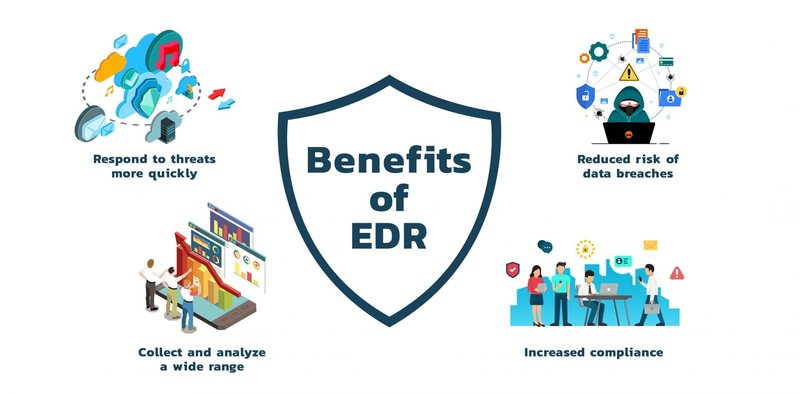
Enhanced Threat Visibility
EDR provides unprecedented visibility into what's happening across all your endpoints. This comprehensive view enables security teams to spot threats that would otherwise remain hidden. Consider that the average time to detect a data breach is still measured in months for many organizations. EDR can reduce this detection time to hours or minutes, dramatically limiting the scope of potential damage.
Rapid Response Capabilities
When a threat is detected, every second counts. EDR solutions enable automated and manual response actions that can isolate infected endpoints, kill malicious processes, delete harmful files, and even roll back systems to pre-infection states. This speed of response is absolutely critical in preventing ransomware from spreading across your network or stopping data exfiltration before sensitive information leaves your organization.
Meeting Compliance Requirements
Many regulatory frameworks now require organizations to implement advanced threat detection and response capabilities. Standards like GDPR, HIPAA, PCI DSS, and various industry-specific regulations increasingly mandate continuous monitoring and rapid incident response. EDR helps organizations meet these compliance requirements while simultaneously improving their actual security posture.
Reducing Security Team Burden
Cybersecurity professionals are in high demand and short supply. EDR solutions with advanced automation capabilities can handle routine threat detection and response tasks, allowing your security team to focus on strategic initiatives and complex threats that truly require human expertise. This force multiplication effect makes EDR invaluable for organizations struggling with resource constraints.
Protection Against Advanced Threats
Traditional security tools struggle against modern attack techniques. EDR excels at detecting and stopping advanced persistent threats, zero-day exploits, ransomware, insider threats, and sophisticated malware campaigns. By analyzing behavioral patterns rather than relying solely on known signatures, EDR can identify threats that have never been seen before.
Key Capabilities of EDR
Understanding the core capabilities that define effective EDR solutions helps organizations evaluate and implement the right technology for their needs. While specific features vary between vendors, the following capabilities represent the foundation of any robust EDR platform.
Continuous Endpoint Monitoring
EDR solutions maintain constant surveillance of all endpoint activities, collecting and recording data about processes, network connections, file operations, registry modifications, and user behaviors. This continuous monitoring creates a comprehensive audit trail that proves invaluable during incident investigations. The depth of data collection allows security teams to reconstruct attack chains and understand exactly how a breach occurred.
Threat Detection and Analysis
Modern EDR platforms employ multiple detection techniques including signature-based detection, behavioral analysis, machine learning algorithms, and threat intelligence integration. This multi-layered approach ensures that threats are identified regardless of whether they're known malware variants or novel attack techniques. Advanced EDR solutions can even detect subtle indicators of compromise that might suggest a sophisticated adversary is already present in your environment.
Automated Response Actions
Speed matters in cybersecurity. EDR platforms can automatically respond to detected threats by isolating affected endpoints, terminating malicious processes, quarantining suspicious files, and blocking network connections to command-and-control servers. These automated responses contain threats before they can spread or cause significant damage, often neutralizing attacks without requiring immediate human intervention.
Forensic Investigation Tools
When security incidents occur, understanding what happened is crucial for remediation and prevention. EDR solutions provide rich forensic data and investigation tools that allow security analysts to trace attack timelines, identify patient zero (the first infected system), map lateral movement through your network, and determine what data may have been compromised. This investigative capability transforms EDR from a detection tool into a comprehensive security operations platform.
Threat Intelligence Integration
EDR platforms integrate with global threat intelligence feeds, allowing them to leverage knowledge about emerging threats, attacker tactics, techniques, and procedures (TTPs), and indicators of compromise (IOCs) identified by researchers worldwide. This collective intelligence helps your EDR solution recognize and stop threats that other organizations have already encountered, providing protection against the latest attack campaigns.
Reporting and Compliance
Effective EDR solutions provide comprehensive reporting capabilities that help organizations understand their security posture, demonstrate compliance with regulatory requirements, and communicate risk to executives and stakeholders. Customizable dashboards, automated reports, and detailed audit logs make it easier to track security metrics and prove due diligence to auditors and regulators.
Common Misconceptions About EDR
Despite its growing adoption, several misconceptions about EDR persist in the cybersecurity community. Addressing these myths helps organizations make informed decisions about their security investments.
Misconception 1: EDR Replaces Antivirus
Many people believe EDR is simply a replacement for traditional antivirus software. In reality, EDR and antivirus serve complementary roles. Antivirus provides foundational protection against known malware, while EDR offers advanced threat detection and response capabilities for sophisticated attacks. Most security experts recommend using both as part of a layered defense strategy, though some next-generation EDR solutions do incorporate traditional antivirus capabilities.
Misconception 2: EDR is Only for Large Enterprises
Some organizations assume EDR is too complex or expensive for small to medium-sized businesses. This couldn't be further from the truth. Modern EDR solutions are increasingly accessible, with cloud-based options and managed service providers (MSSPs) making enterprise-grade security available to organizations of all sizes. In fact, smaller businesses are often more vulnerable to attacks and can benefit tremendously from EDR's protective capabilities.
Misconception 3: EDR is Set-It-and-Forget-It
While EDR solutions offer powerful automation, they're not entirely hands-off. Effective EDR requires proper configuration, ongoing tuning to reduce false positives, regular updates, and skilled personnel to investigate alerts and respond to complex threats. Organizations must commit to maintaining their EDR deployment and developing their team's skills to maximize the technology's value.
Misconception 4: EDR Guarantees Complete Protection
No security solution can promise 100% protection against all threats. EDR significantly enhances your security posture and dramatically reduces risk, but it must be part of a comprehensive defense-in-depth strategy that includes network security, identity and access management, security awareness training, data encryption, and other controls. Relying solely on EDR leaves dangerous gaps in your defenses.
Misconception 5: All EDR Solutions are the Same
The EDR market has exploded in recent years, with numerous vendors offering solutions that vary dramatically in capabilities, ease of use, detection accuracy, and performance impact. Not all EDR platforms are created equal. Organizations must carefully evaluate solutions based on their specific needs, infrastructure, and security maturity rather than assuming any EDR will suffice.
How to Implement EDR in Your Business
Successfully implementing EDR requires careful planning, proper execution, and ongoing optimization. Follow these steps to ensure your EDR deployment delivers maximum security value.
Assess Your Current Security Posture
Begin by evaluating your existing security infrastructure, identifying gaps in visibility and response capabilities. Understand your organization's risk profile, compliance requirements, and the types of threats most relevant to your industry. This assessment helps you define clear objectives for your EDR implementation and choose a solution aligned with your needs.
Select the Right EDR Solution
Research available EDR platforms, considering factors like detection accuracy, ease of deployment, integration with existing tools, scalability, vendor support, and total cost of ownership. Request demonstrations, speak with current customers, and if possible, conduct proof-of-concept testing with your top contenders. Pay particular attention to how well solutions handle the types of endpoints and operating systems prevalent in your environment.
Plan Your Deployment Strategy
Develop a phased rollout plan that minimizes disruption to business operations. Many organizations start by deploying EDR to critical systems and high-value targets before expanding to all endpoints. Consider factors like network bandwidth for telemetry data, agent installation methods, and how you'll handle endpoints that are frequently offline or remote. Create detailed documentation covering deployment procedures, configuration standards, and troubleshooting guidelines.
Configure and Tune Your EDR
Proper configuration is critical for EDR effectiveness. Work with your vendor to establish appropriate detection policies, alert thresholds, and automated response rules. Plan for an initial tuning period where you'll adjust settings to reduce false positives while maintaining strong detection capabilities. Remember that tuning is an ongoing process as your environment and threat landscape evolve.
Train Your Security Team
EDR tools are only as effective as the people using them. Invest in comprehensive training for your security team, ensuring they understand how to investigate alerts, interpret forensic data, and execute response actions. Consider whether you need to hire additional security personnel or engage a managed detection and response (MDR) service to supplement your internal capabilities.
Establish Response Procedures
Develop clear incident response playbooks that define how your team will react to different types of alerts. These procedures should specify escalation paths, communication protocols, containment actions, and remediation steps. Regular tabletop exercises help ensure your team can execute these procedures effectively when real incidents occur.
Monitor, Measure, and Optimize
Continuously monitor your EDR deployment's performance and effectiveness. Track metrics like mean time to detect (MTTD), mean time to respond (MTTR), false positive rates, and coverage percentages. Use these metrics to identify improvement opportunities and demonstrate the value of your EDR investment to organizational leadership. Regular reviews ensure your EDR solution evolves with your business and the threat landscape.
How EDR is Related to Cybersecurity
EDR occupies a central position in modern cybersecurity architectures, serving as a critical component within a broader ecosystem of security technologies and practices. Understanding how EDR relates to other cybersecurity domains helps organizations build comprehensive, effective defense strategies.
EDR and the Kill Chain
The cyber kill chain describes the stages of a cyberattack from reconnaissance to data exfiltration. EDR is specifically designed to break this chain by detecting and stopping attacks at multiple stages. While perimeter defenses like firewalls and email gateways prevent many attacks during early stages, EDR provides critical protection when attackers successfully breach initial defenses and attempt to execute malicious actions on endpoints.
Integration with Security Operations Centers (SOC)
EDR serves as a fundamental data source and operational tool for Security Operations Centers. The detailed telemetry and forensic capabilities EDR provides enable SOC analysts to investigate incidents efficiently, hunt for hidden threats, and coordinate responses across the organization. Many EDR platforms include Security Information and Event Management (SIEM) integration, centralizing security data from multiple sources for comprehensive threat visibility.
Relationship to Extended Detection and Response (XDR)
As cybersecurity evolves, EDR has given birth to Extended Detection and Response (XDR), which applies similar detection and response principles across multiple security layers including network, cloud, email, and identity systems. XDR represents the natural evolution of EDR, providing even broader visibility and coordinated response across an organization's entire technology stack. Organizations that successfully implement EDR often find themselves well-positioned to adopt XDR as their security programs mature.
Complementing Threat Intelligence
EDR platforms both consume and contribute to threat intelligence. They leverage external intelligence feeds to improve detection of known threats while generating intelligence about attacks targeting your organization that can be shared with the broader security community. This bidirectional relationship creates a powerful feedback loop that strengthens collective defense against cyber threats.
Supporting Zero Trust Architecture
Zero Trust security models operate on the principle of "never trust, always verify." EDR plays a crucial role in Zero Trust implementations by providing continuous verification of endpoint integrity and behavior. The detailed visibility EDR offers helps organizations implement least-privilege access policies and detect when compromised credentials or insider threats attempt to abuse legitimate access.
Enabling Proactive Threat Hunting
Beyond reactive detection, EDR empowers security teams to proactively hunt for threats that may have evaded automated detection. The rich forensic data and query capabilities EDR provides allow skilled analysts to search for subtle indicators of compromise, uncover advanced persistent threats, and identify security weaknesses before attackers can exploit them.
FAQs
What's the difference between EDR and antivirus?
Traditional antivirus primarily relies on signature-based detection to identify and block known malware. EDR goes much further by continuously monitoring endpoint behavior, detecting unknown threats through behavioral analysis, providing detailed forensic capabilities, and enabling rapid incident response. While antivirus asks "is this file known to be bad?", EDR asks "is this behavior suspicious?" Many modern solutions combine both capabilities.
How much does EDR cost?
EDR pricing varies significantly based on factors like the number of endpoints, feature set, deployment model (cloud vs. on-premises), and whether you include managed services. Small business solutions might start around $5-10 per endpoint monthly, while enterprise platforms with advanced capabilities can cost $50-100+ per endpoint annually. Consider total cost of ownership including implementation, training, and ongoing management when budgeting.
Can EDR slow down my computers?
Modern EDR solutions are designed to minimize performance impact, but some resource usage is inevitable given the continuous monitoring they perform. Most users won't notice any slowdown during normal operations. However, during intensive activities like full system scans or incident response actions, some performance impact may occur. Reputable vendors provide performance specifications and allow testing before full deployment.
Do I need EDR if I have a firewall?
Absolutely. Firewalls and EDR serve different but complementary purposes. Firewalls control network traffic entering and leaving your organization, while EDR protects what happens on endpoints after threats bypass perimeter defenses (which increasingly sophisticated attacks do regularly). A comprehensive security strategy requires both perimeter defenses and endpoint protection.
How long does EDR implementation take?
Implementation timelines vary based on organization size, infrastructure complexity, and resource availability. Small deployments might be completed in days, while large enterprise rollouts can take several months. The technical deployment of EDR agents is often relatively quick; most time is spent on planning, configuration, tuning, and training. Cloud-based EDR solutions typically deploy faster than on-premises alternatives.
Can EDR stop ransomware?
EDR is highly effective against ransomware, detecting the behavioral patterns associated with encryption activities and enabling rapid response to isolate infected systems before ransomware spreads. However, no solution offers 100% protection. EDR should be part of a comprehensive anti-ransomware strategy that includes regular backups, email security, security awareness training, and network segmentation.
Conclusion
Endpoint Detection and Response has evolved from an advanced capability for security-mature organizations into an essential component of any credible cybersecurity program. The threats facing modern businesses are too sophisticated, too persistent, and too damaging for traditional security tools to handle alone.
EDR provides the visibility, detection accuracy, and response speed necessary to protect against today's advanced cyber threats. From ransomware attacks that can cripple operations within hours to advanced persistent threats that lurk undetected for months, EDR offers critical capabilities that can mean the difference between a minor security incident and a catastrophic breach.
The journey to implementing EDR requires careful planning, appropriate resource investment, and ongoing commitment to security excellence. However, the alternative, remaining vulnerable to attacks that could destroy customer trust, trigger massive regulatory penalties, and even threaten your organization's survival, is simply unacceptable.
As you move forward with evaluating and implementing EDR, remember that cybersecurity is not a destination but a continuous journey. The threat landscape will continue evolving, and your security program must evolve with it. EDR provides a strong foundation for that evolution, offering the adaptability and advanced capabilities necessary to meet both current and emerging threats.
Contact Regulance today to schedule a security consultation and learn how we can help you implement EDR and build a comprehensive cybersecurity strategy that protects your business, your customers, and your reputation. The threats are real, but with the right partner and the right technology, you can face them with confidence.