What Are PECR Requirements and How Can You Align Them With GDPR?


Introduction
Every day, your business sends emails, makes calls, and your website drops cookies on visitors' devices. But are you doing it legally? The Privacy and Electronic Communications Regulations, or PECR, might be the most important privacy law you've never heard of. While everyone talks about GDPR, PECR quietly governs the nuts and bolts of how UK businesses can actually communicate with customers digitally.
PECR’s regulations determine whether you can send that promotional email, make that sales call, or track website visitors with cookies. Get it wrong, and you're looking at fines up to £500,000, not to mention the reputational damage that comes with being called out for privacy violations.
PECR works hand-in-hand with GDPR, but they're not the same thing. GDPR pauses the big-picture data protection framework, while PECR zooms in specifically on electronic marketing and online privacy. You need both to stay compliant, but PECR often has stricter rules, especially around marketing consent and cookie usage.
If you're a small business owner wondering if your email campaigns are legal, a marketing manager trying to navigate consent requirements, or a compliance officer building a bulletproof privacy strategy, understanding PECR is non-negotiable. This guide breaks down everything you need to know about PECR, its relationship with GDPR, and exactly how to implement these regulations in your business without losing your mind or your marketing effectiveness.
What is PECR?
The Privacy and Electronic Communications Regulations (PECR) are UK laws that sit alongside the General Data Protection Regulation (GDPR) to provide specific privacy protections in the realm of electronic communications. First introduced in 2003 and updated over the years, PECR creates detailed rules about marketing communications, cookies, and electronic messaging that go beyond what GDPR covers.
PECR is the specialized rulebook for the digital communication world. While GDPR provides broad data protection principles, PECR zooms in on the practical aspects of how businesses can contact people through phones, emails, text messages, and online tracking technologies.
Key areas covered by PECR include:
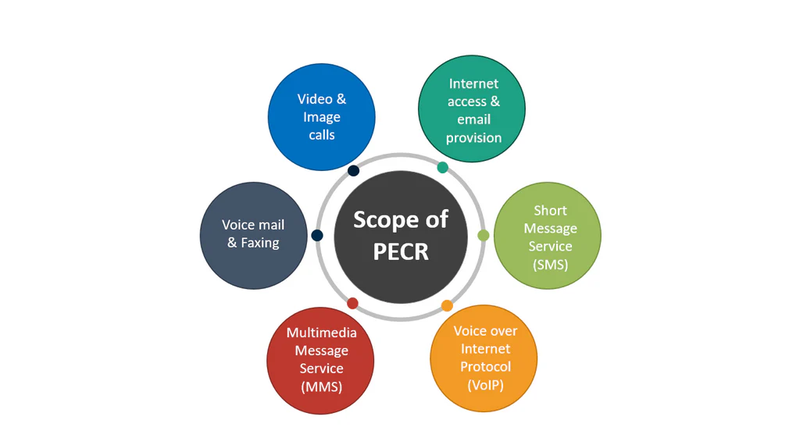
Marketing communications: PECR establishes strict rules about when and how businesses can send marketing messages via telephone, email, text, or fax. The regulations differentiate between communications to individuals and those to corporate entities, with stricter requirements for contacting individual consumers.
Cookies and similar technologies: These regulations require websites to inform users about cookies and obtain consent before storing or accessing information on someone's device. This is why virtually every website you visit now displays a cookie banner asking for your preferences.
Security of public electronic communications services: PECR mandates that telecommunications providers and network operators maintain the security of their services and notify subscribers of any security breaches that could adversely affect their personal data.
Traffic and location data: The regulations control how service providers can process data about where and when communications take place, ensuring this sensitive information receives appropriate protection.
Caller identification: PECR gives people the right to prevent their telephone number from being displayed to the person they're calling and protects against unsolicited automated calling systems.
The regulations apply to any organization using electronic communications for marketing purposes or operating a website that uses cookies, regardless of where the organization is based, as long as they're targeting people in the UK. This means PECR has a wide-reaching impact across virtually all sectors that engage in digital business activities.
Strategic Benefits of PECR
While compliance requirements might initially seem like a burden, PECR actually delivers substantial benefits to both consumers and businesses operating in the digital space.
Consumer protection and trust: The most immediate benefit is the enhanced protection PECR provides to individuals. By requiring explicit consent for marketing communications and tracking technologies, these regulations put consumers back in control of their digital experience. People can choose which brands they hear from and how their online behavior is monitored, reducing the intrusive nature of digital marketing that has become increasingly problematic.
Enhanced brand reputation: For businesses, demonstrating PECR compliance signals professionalism and respect for customer privacy. In an era where data breaches and privacy scandals regularly make headlines, companies that visibly prioritize compliance build stronger trust with their audience. This trust translates directly into better customer relationships and increased loyalty.
Improved marketing effectiveness: Although it might seem counterintuitive, PECR actually helps businesses create more effective marketing campaigns. When you can only contact people who have genuinely opted in to hear from you, your audience becomes more engaged and receptive. Email open rates, click-through rates, and conversion rates typically improve when you're communicating with people who actually want to receive your messages rather than blasting out unsolicited communications.
Level playing field: PECR creates consistent rules that all businesses must follow, preventing unscrupulous competitors from gaining unfair advantages through aggressive or invasive marketing tactics. This standardization benefits legitimate businesses by ensuring everyone operates under the same framework.
Reduced legal and financial risk: By following PECR guidelines, businesses protect themselves from significant fines and legal action. The Information Commissioner's Office (ICO) has the power to issue substantial penalties for PECR violations, with fines reaching up to £500,000 for serious breaches. Compliance is far more cost-effective than facing enforcement action.
Better data quality: When you build your marketing lists through proper consent mechanisms, you end up with more accurate, up-to-date contact information. People who voluntarily provide their details are more likely to keep them current, reducing bounce rates and improving your overall data quality.
What is the Relationship Between PECR and GDPR?
Understanding how PECR and GDPR work together is essential for anyone navigating UK data protection law. These two frameworks complement each other, creating a comprehensive system of privacy protection.
GDPR provides the foundational principles of data protection that apply to all personal data processing activities. It establishes core concepts like lawful bases for processing, data subject rights, accountability, and transparency. GDPR is broad and applies to virtually any situation where personal data is collected, used, or stored.
PECR, on the other hand, provides specific rules for particular types of activities that involve electronic communications. It offers detailed, prescriptive requirements for areas that GDPR touches on more generally. When both regulations apply to the same activity, businesses must comply with both sets of rules simultaneously.
The relationship works on several levels:
Complementary coverage: Where GDPR sets general data protection standards, PECR adds specific requirements for electronic communications. For instance, GDPR requires a lawful basis for processing personal data, while PECR specifically requires consent for sending direct marketing emails to individual subscribers. You need both the GDPR lawful basis and the PECR consent.
Enforcement alignment: Both PECR and GDPR are enforced by the Information Commissioner's Office in the UK, ensuring consistent interpretation and application. This unified enforcement approach helps businesses understand their obligations more clearly.
Consent standards: PECR's consent requirements must meet GDPR's high standards for valid consent. This means consent must be freely given, specific, informed, unambiguous, and easily withdrawable. The GDPR definition of consent effectively raises the bar for PECR compliance.
Data subject rights: While PECR doesn't explicitly grant the same data subject rights as GDPR (such as the right to access, rectification, or erasure), these GDPR rights still apply to personal data processed under PECR activities. Someone could exercise their GDPR right to erasure to have their data removed from your marketing lists, for example.
Documentation and accountability: Both frameworks require organizations to document their compliance efforts and be able to demonstrate how they meet regulatory requirements. Your PECR compliance efforts should integrate with your broader GDPR accountability measures.
In practice, you should think of PECR and GDPR as two layers of protection working together. GDPR provides the general framework and principles, while PECR adds specific requirements for electronic communications. Compliance with one doesn't automatically mean compliance with the other, you need to address both.
What is the Difference and Similarities Between PECR and GDPR?
While PECR and GDPR work together, understanding their distinct characteristics helps clarify your compliance obligations.
Key differences:
Scope of application: GDPR applies to all personal data processing activities, regardless of the method or channel. PECR specifically focuses on electronic communications, including marketing calls, emails, text messages, and cookies. If you're processing employee data in your HR system, only GDPR applies. If you're sending marketing emails, both GDPR and PECR apply.
Consent requirements: Under GDPR, consent is just one of six possible lawful bases for processing personal data. Organizations can also rely on legitimate interests, contractual necessity, or legal obligations. PECR, however, typically requires specific consent for marketing communications to individual subscribers and for most cookie usage. The consent requirement under PECR is generally more stringent and less flexible.
Corporate versus individual distinction: PECR makes an important distinction between communications to individual subscribers and corporate subscribers. The rules for marketing to businesses are more relaxed under PECR, you can generally send unsolicited marketing to a generic corporate email address without prior consent. GDPR doesn't make this same distinction, treating all personal data equally regardless of whether it relates to someone in a business or personal capacity.
Penalty structures: While both regulations carry significant penalties, the potential fines differ. GDPR violations can result in fines up to €20 million or 4% of global annual turnover, whichever is higher. PECR penalties can reach £500,000 for serious breaches. The calculation methods and maximum amounts differ, though both are substantial enough to cause serious business impact.
Territorial scope: GDPR has broad extraterritorial reach, applying to any organization processing data of individuals in the EU, regardless of where the organization is based. PECR, as UK regulations, primarily governs activities targeting people in the UK, though the principles have equivalents in other jurisdictions through the ePrivacy Directive.
Important similarities:
Consent standards: When PECR requires consent, it must meet GDPR's high standards. Both frameworks agree that consent must be freely given, specific, informed, unambiguous, and easy to withdraw. A pre-ticked box or implied consent won't satisfy either regulation.
Transparency obligations: Both PECR and GDPR emphasize transparency. You must clearly explain what you're doing with people's data and communications preferences, using plain language that people can actually understand.
Individual rights focus: Both regulations ultimately aim to protect individual privacy and give people control over how organizations interact with them electronically and use their personal information.
ICO enforcement: In the UK, the Information Commissioner's Office enforces both regulations, providing guidance, investigating complaints, and issuing penalties for violations. This unified enforcement creates consistency in interpretation.
Documentation requirements: Both frameworks expect organizations to document their compliance activities, maintain records of consent, and be able to demonstrate how they meet regulatory requirements.
The key takeaway is that PECR and GDPR aren't competing regulations; they're complementary. PECR adds a layer of specific requirements on top of GDPR's general framework for the particular context of electronic communications. Effective compliance means addressing both sets of requirements in your processes.
How are PECR Used?
Understanding the practical application of PECR helps clarify how these regulations impact everyday business activities. Let's explore the main scenarios where PECR comes into play.
Email marketing: This is perhaps the most common PECR application. Before sending marketing emails to individual subscribers, you must obtain their prior consent. This typically happens through a subscription form where people actively opt in. The "soft opt-in" exception allows you to market to existing customers about similar products or services, provided you give them a clear opportunity to opt out when collecting their details and in every subsequent communication. For business-to-business marketing, PECR is more lenient; you can email generic corporate addresses without prior consent, though you must still provide an opt-out mechanism.
Telephone marketing: PECR restricts unsolicited marketing calls to individual subscribers. If someone has registered with the Telephone Preference Service (TPS), you cannot call them for marketing purposes unless they've specifically consented to hear from your organization. For business numbers, the rules are more relaxed, though the Corporate Telephone Preference Service (CTPS) operates similarly for organizations that don't want marketing calls.
Text message marketing: SMS marketing requires prior consent from individual recipients before you send promotional messages. These rules are strict, with no soft opt-in exception. Each text should include your identity and a clear way to opt out. The high engagement rates of SMS marketing make compliance especially important, as violations can quickly generate complaints.
Cookie compliance: When someone visits your website, PECR requires you to provide clear information about the cookies and similar technologies you use and obtain consent before storing or accessing information on their device. This is why cookie banners have become ubiquitous. However, not all cookies require consent, those that are strictly necessary for the website to function (like shopping cart cookies) are exempt. Analytics, advertising, and social media cookies typically do require consent.
Automated calling systems: PECR prohibits the use of automated calling systems (where a recorded message is played instead of a live person speaking) without prior consent from the recipient, regardless of whether the call is for marketing purposes.
Fax marketing: Though increasingly rare, fax marketing follows similar rules to email marketing under PECR. You need consent before sending marketing faxes to individual subscribers, with limited exceptions for existing customer relationships.
Location data and traffic data: For telecommunications providers, PECR controls how they can use and process information about the location of devices and the details of communications (who contacted whom, when, and for how long). This data can only be processed with consent or when necessary for specific purposes like billing.
Directory listings: PECR gives individuals the right to control whether their contact information appears in public directories and to limit how that information can be used by others accessing the directory.
In each of these scenarios, organizations must not only obtain proper consent but also maintain records of that consent, make it easy for people to withdraw consent, and honor opt-out requests promptly. The practical application requires robust systems for capturing, storing, and acting on communication preferences.
How to Implement PECR For Your Business?
Successfully implementing PECR compliance requires a systematic approach that integrates privacy considerations into your business operations. Here's a practical framework for getting it right.
Conduct a comprehensive audit: Start by mapping all the ways your business uses electronic communications. Identify every channel where you contact customers or prospects email, phone, SMS, fax and every point where your website uses cookies or similar technologies. Document your current practices, including how you obtain consent, store preferences, and manage opt-outs. This audit reveals gaps between your current operations and PECR requirements.
Review and update your consent mechanisms: Examine how you currently collect consent for marketing communications and cookie usage. Ensure your consent mechanisms meet GDPR standards; they must be freely given, specific, informed, and unambiguous. Replace pre-ticked boxes with clear opt-in checkboxes. Separate different types of consent (email, phone, SMS) so people can choose their preferred channels. Include clear information about what people are consenting to, who will contact them, and how often.
Implement a robust cookie consent solution: Your website needs a compliant cookie consent mechanism. This typically involves a cookie banner or pop-up that appears when someone first visits your site, explaining what cookies you use and why, and requesting consent before non-essential cookies are activated. Ensure your solution actually prevents non-essential cookies from running until consent is granted. Provide granular controls so visitors can accept or reject different categories of cookies. Make your cookie policy easily accessible and written in plain language.
Establish a preference management system: Create systems to capture, store, and act on people's communication preferences. This might involve adding preference fields to your customer relationship management (CRM) system, email marketing platform, or customer database. Ensure these systems can track when consent was given, what was consented to, how consent was obtained, and when preferences change. Every system that might trigger a marketing communication needs access to current preference data.
Train your team: Everyone who handles customer communications or website management needs to understand PECR requirements. This includes marketing teams, sales staff, customer service representatives, and web developers. Training should cover what activities require consent, how to obtain valid consent, how to check preferences before contacting someone, and how to handle opt-out requests. Make PECR compliance part of your organizational culture.
Suppress against preference services: Before conducting telephone marketing campaigns, screen your call lists against the Telephone Preference Service (TPS) and Corporate Telephone Preference Service (CTPS). These services are updated regularly, so screening should happen close to when you plan to call. Many marketing platforms can integrate TPS/CTPS suppression into their systems.
Create clear opt-out mechanisms: Every marketing communication must include a simple way for recipients to opt out of future communications. For emails, this typically means an unsubscribe link in every message. For texts, provide a number to text "STOP." For calls, train callers to ask if the person wants to continue receiving calls and log refusals immediately. Process opt-out requests promptly; ideally within 24 hours, and no longer than is reasonably practicable.
Review third-party relationships: If you use marketing agencies, email service providers, or other third parties to handle communications on your behalf, ensure they understand and comply with PECR. Your contracts should clearly define responsibilities for compliance. Remember, as the business sending the communications, you remain ultimately responsible for PECR compliance even when using external partners.
Document everything: Maintain detailed records of your PECR compliance efforts. Document consent records, showing when and how you obtained permission to contact someone. Keep evidence of your compliance processes, including your cookie consent mechanism, preference management systems, and staff training. This documentation protects you if complaints arise or regulators ask questions about your practices.
Monitor and update regularly: PECR compliance isn't a one-time project. Regularly review your practices to ensure they remain compliant. When launching new marketing channels or website features, assess PECR implications before launch. Stay informed about guidance updates from the ICO and evolving best practices. Consider conducting annual compliance reviews to identify and address any gaps.
Handle complaints appropriately: Despite your best efforts, you might receive complaints about marketing communications or cookie practices. Have a clear process for handling these complaints, investigating what happened, taking corrective action, and responding to the complainant. Document complaints and your responses, as regulators may review these if issues escalate.
Implementing PECR by breaking it down into manageable steps and integrating compliance into your regular business processes, you can protect your organization while maintaining effective customer communications.
FAQs
Q: Do PECR apply to business-to-business communications? A: PECR distinguishes between individual and corporate subscribers. For emails and calls to generic corporate addresses (like [email protected]), the rules are more relaxed, and you generally don't need prior consent. However, if you're contacting a named individual at a business (like [email protected]), PECR's stricter rules typically apply. Always provide opt-out options regardless of whether you're contacting individuals or businesses.
Q: What is the soft opt-in exception, and when can I use it? A: The soft opt-in allows you to send marketing emails to existing customers without obtaining explicit consent, provided you meet specific conditions: the person's contact details were obtained during a sale or negotiations for a sale, you're marketing similar products or services to what they bought or showed interest in, you gave them a clear opportunity to opt out when collecting their details, and you provide an opt-out option in every marketing message. This exception only applies to email marketing, not telephone calls or texts.
Q: How long should I keep records of consent? A: You should keep consent records for as long as you rely on that consent to contact someone, plus a reasonable period afterward to defend against potential complaints. Many organizations retain consent records for several years after someone opts out or their last interaction with the business. Consider your specific circumstances and consult legal advice for your situation.
Q: What cookies don't require consent under PECR? A: Cookies that are strictly necessary for the website to function don't require consent. This includes cookies essential for security, authenticating users, remembering shopping cart contents, or enabling basic website functions. Analytics, advertising, social media, and preference cookies typically do require consent.
Q: What happens if I violate PECR? A: PECR violations can result in enforcement action from the ICO, including substantial fines up to £500,000 for serious breaches. Beyond financial penalties, violations can damage your reputation, erode customer trust, and generate negative publicity. The ICO typically takes a proportionate approach, considering factors like the nature of the violation, how many people were affected, and whether you took steps to prevent harm.
Q: Do PECR apply to social media marketing? A: PECR primarily governs direct electronic communications like email, calls, and texts. Social media posts on your own business pages generally don't fall under PECR. However, if you're sending direct messages to people on social media for marketing purposes, you should obtain consent first. Social media advertising uses cookies and similar technologies, so your website's cookie consent mechanism becomes relevant when tracking conversions or retargeting users.
Q: How quickly must I process opt-out requests? A: You should suppress someone from future marketing communications as quickly as possible after receiving an opt-out request. While PECR doesn't specify an exact timeframe, best practice is within 24 hours. You must certainly do it within a reasonable time period, and any communications sent after someone opts out could generate complaints.
Q: Can I buy marketing lists and use them for email campaigns? A: You can purchase lists, but you must ensure the list provider obtained proper consent for the contacts to receive marketing from third parties like your organization. Simply having consent to be contacted isn't enough the consent must specifically cover receiving communications from other organizations. Many purchased lists don't meet PECR standards, making them risky to use. Building your own list through direct consent is generally safer and more effective.
Conclusion
Navigating the world of PECR might initially seem daunting, but understanding these regulations is essential for any business operating in the digital space. Far from being merely a compliance burden, PECR represents an opportunity to build stronger, more trusting relationships with your customers by respecting their privacy and communication preferences.
The key insights to remember are that PECR works alongside GDPR to create comprehensive protection for electronic communications, that consent is central to most PECR requirements, and that compliance requires thoughtful implementation across your marketing and digital operations. By obtaining proper consent, respecting people's preferences, maintaining clear records, and making it easy for people to opt out, you'll not only meet regulatory requirements but also improve the quality and effectiveness of your customer communications.
As privacy regulations continue to evolve and consumer expectations around data protection grow stronger, investing in solid PECR compliance pays dividends far beyond avoiding penalties. Organizations that prioritize privacy build better brands, foster customer loyalty, and position themselves as trustworthy partners in an increasingly privacy-conscious marketplace.
Remember that PECR compliance is an ongoing commitment, not a one-time project. Stay informed about guidance updates, regularly review your practices, and maintain a culture of privacy awareness throughout your organization. When in doubt, err on the side of respecting privacy; it's always better to ask for permission than to risk damaging trust.
Contact Regulance today to schedule a consultation and discover how we can simplify your compliance challenges, giving you peace of mind and freeing you to focus on what you do best and growing your business.