What Are Cybersecurity Vulnerabilities and How Do You Fix Them?


Introduction
Cybersecurity vulnerabilities represent critical weak points that can expose organizations and individuals to devastating attacks. These vulnerabilities are flaws, weaknesses, or gaps in software, hardware, networks, or processes that cybercriminals exploit to gain unauthorized access, steal sensitive data, or disrupt operations. As our dependence on technology grows exponentially, understanding and addressing these security gaps has never been more crucial.
The statistics indicate that cyberattacks cost businesses billions of dollars annually, with data breaches affecting millions of individuals worldwide. From small startups to multinational corporations, no organization is immune to the threat posed by unpatched vulnerabilities. The average time to identify and contain a data breach extends into months, during which attackers can exfiltrate valuable information, install ransomware, or establish persistent backdoors.
What makes cybersecurity vulnerabilities particularly dangerous is their diverse nature. They can originate from outdated software, misconfigured systems, poor coding practices, inadequate security protocols, or even human error. Attackers constantly scan for these weaknesses, using automated tools to identify exploitable targets across the internet. Once discovered, vulnerabilities can be weaponized within hours, creating a race against time for security teams.
This guide explores the intricate world of cybersecurity vulnerabilities, examining their types, impacts, detection methods, and mitigation strategies.
Understanding Cybersecurity Vulnerabilities
Cybersecurity vulnerabilities are fundamental weaknesses in the security posture of digital systems that can be exploited by threat actors. To truly grasp their significance, we need to distinguish between vulnerabilities, threats, and exploits; terms often used interchangeably but representing distinct concepts.
A vulnerability is the actual flaw or weakness itself. It might be a bug in software code, a misconfiguration in server settings, or an outdated protocol that lacks modern security features. These vulnerabilities exist regardless of whether anyone knows about them or attempts to exploit them.
Threats, conversely, are potential dangers that could leverage these vulnerabilities. A threat could be a malicious hacker, a sophisticated criminal organization, or even an automated botnet scanning for exploitable systems. The threat represents the actor or circumstance that might take advantage of existing weaknesses.
Exploits are the methods or tools used to actually take advantage of vulnerabilities. When a threat actor develops or deploys an exploit, they're actively weaponizing a known weakness to achieve their objectives, whether that's data theft, system disruption, or unauthorized access.
Vulnerabilities fall into several categories based on their origin. Software vulnerabilities emerge from coding errors, logic flaws, or design oversights during development. Hardware vulnerabilities exist in physical components, firmware, or chip-level architecture. Configuration vulnerabilities result from improper system setup or security settings. Human vulnerabilities arise from insufficient training, poor security awareness, or social engineering susceptibility.
The lifecycle of a vulnerability typically follows a pattern: introduction during development or deployment, discovery by researchers or attackers, disclosure to vendors or the public, patch development and release, and finally remediation by end users. However, this process can break down at any stage, leaving systems exposed for extended periods.
Common Types of Cybersecurity Vulnerabilities
Understanding specific vulnerability types helps organizations prioritize their security efforts and allocate resources effectively. Each category presents unique challenges and requires tailored mitigation approaches.
Software and Application Vulnerabilities represent the most prevalent category. SQL injection attacks exploit weaknesses in database queries, allowing attackers to manipulate or extract sensitive information. Cross-site scripting (XSS) vulnerabilities enable malicious scripts to execute in users' browsers, potentially stealing credentials or hijacking sessions. Buffer overflow vulnerabilities occur when programs write more data to memory than allocated, potentially allowing arbitrary code execution. Zero-day vulnerabilities are particularly dangerous; these are flaws unknown to vendors, meaning no patches exist when attackers begin exploitation.
Network Vulnerabilities expose communication infrastructure to compromise. Man-in-the-middle attacks intercept data transmission between parties, potentially capturing sensitive information. Insecure network protocols lacking encryption broadcast data in plain text. Weak wireless security configurations create entry points for unauthorized access. Distributed Denial of Service (DDoS) vulnerabilities overwhelm systems with traffic, rendering services unavailable to legitimate users.
Configuration and Deployment Vulnerabilities often result from human error. Default credentials left unchanged provide easy access for attackers scanning common username-password combinations. Unnecessary services running on systems expand the attack surface without providing value. Improper access controls grant excessive permissions to users or applications. Missing security patches leave known vulnerabilities unaddressed despite available fixes.
Authentication and Authorization Weaknesses undermine access control systems. Weak password policies allow easily guessed credentials. Broken authentication mechanisms fail to properly verify user identities. Missing multi-factor authentication eliminates an additional security layer. Session management flaws enable session hijacking or fixation attacks.
Physical Security Vulnerabilities include unsecured server rooms, unencrypted portable devices, and improper disposal of hardware containing sensitive data. These often-overlooked weaknesses can provide direct system access to determined attackers.
The Impact of Cybersecurity Breaches
The consequences of exploited vulnerabilities extend far beyond immediate technical disruption, creating ripple effects throughout organizations and their stakeholder ecosystems. Understanding these impacts underscores the critical importance of proactive vulnerability management.
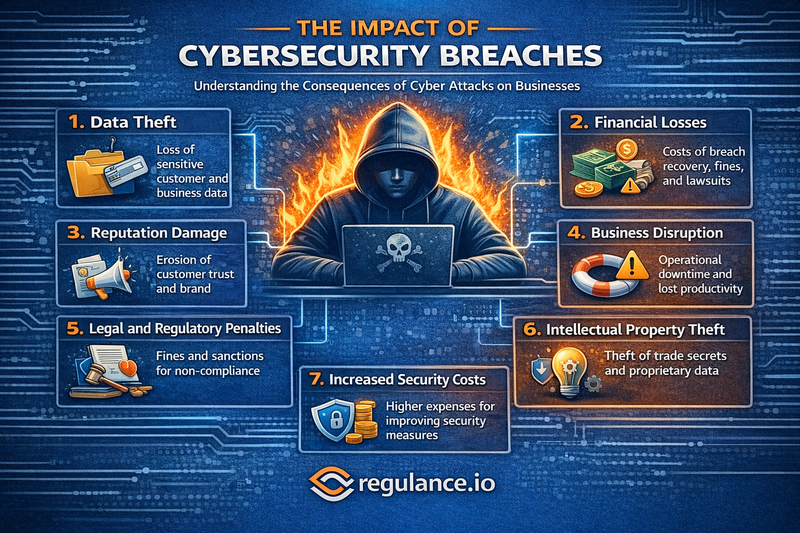
Financial Costs represent the most immediately quantifiable impact. Direct expenses include incident response services, forensic investigations, legal fees, regulatory fines, and ransom payments. Indirect costs encompass business interruption losses, increased insurance premiums, and investments in enhanced security infrastructure. Studies consistently show that the average cost of a data breach runs into millions of dollars, with expenses continuing long after initial containment.
Reputational Damage can prove even more devastating than financial losses. Customer trust, painstakingly built over years, evaporates in moments following a publicized breach. Negative media coverage amplifies the damage, while social media enables rapid spread of unfavorable narratives. Customers migrate to competitors perceived as more secure, and potential clients hesitate before engaging with compromised organizations. Brand recovery requires sustained effort and significant resources, with some organizations never fully regaining their previous standing.
Operational Disruption paralyzes business processes. Ransomware attacks encrypt critical data, halting operations until systems are restored. Compromised infrastructure requires extensive rebuilding and security hardening. Employee productivity plummets as teams navigate workarounds and recovery procedures. Supply chain partners may sever relationships, fearing contamination of their own systems.
Legal and Regulatory Consequences intensify as data protection laws strengthen globally. Regulations like GDPR, CCPA, and HIPAA impose substantial penalties for inadequate security practices. Class action lawsuits from affected customers create additional liability exposure. Regulatory investigations consume leadership attention and organizational resources. Compliance failures can result in mandatory audits, consent decrees, or industry-specific sanctions.
Intellectual Property Theft threatens competitive advantage. Stolen research, proprietary algorithms, trade secrets, and strategic plans flow to competitors or hostile nations. The loss of competitive differentiation can permanently alter market position, particularly for innovation-driven organizations.
Personal Privacy Violations affect individuals whose data was compromised, leading to identity theft, financial fraud, and psychological distress. Organizations bear ethical responsibility for protecting customer information, and breaches represent fundamental failures of this trust.
Identifying Vulnerabilities in Your Systems
Proactive vulnerability identification forms the foundation of effective cybersecurity. Organizations cannot protect against threats they don't know exist, making comprehensive discovery essential to security posture.
Vulnerability Scanning provides automated assessment of known weaknesses. Network scanners probe systems for common vulnerabilities, open ports, and misconfigurations. Application scanners examine web applications for coding flaws and security gaps. Database scanners identify unauthorized access points and weak configurations. Authenticated scans, which use credentials to examine systems internally, reveal more comprehensive vulnerability landscapes than unauthenticated external scans.
Penetration Testing simulates real-world attacks to identify exploitable vulnerabilities. Ethical hackers attempt to breach systems using techniques employed by malicious actors. Black box testing proceeds without internal knowledge, mimicking external attackers. White box testing leverages complete system information to identify all possible vulnerabilities. Gray box testing combines both approaches, balancing realism with thoroughness. Penetration testing validates whether theoretical vulnerabilities are actually exploitable in your environment.
Security Audits and Assessments provide comprehensive evaluations beyond technical scanning. Configuration reviews ensure systems align with security best practices. Code reviews examine application source code for vulnerabilities. Architecture assessments evaluate overall security design. Policy and procedure reviews identify gaps in security governance. Third-party audits bring external perspectives and specialized expertise.
Threat Intelligence Integration enhances vulnerability identification by providing context. Understanding which vulnerabilities are actively exploited in the wild helps prioritize remediation efforts. Threat intelligence feeds alert organizations to emerging attack patterns and newly discovered vulnerabilities affecting their technology stack.
Asset Discovery and Inventory Management ensure complete visibility. Organizations cannot secure assets they don't know exist. Shadow IT, forgotten systems, and unauthorized devices create blind spots in vulnerability management. Comprehensive asset inventories document all hardware, software, and network components, enabling thorough vulnerability assessment.
Continuous Monitoring identifies vulnerabilities introduced through changes. New software deployments, configuration modifications, and system updates can inadvertently create security gaps. Real-time monitoring detects anomalies and potential compromises as they occur rather than during periodic assessments.
Best Practices for Vulnerability Management
Effective vulnerability management requires systematic approaches that balance thoroughness with operational practicality. Organizations must establish processes that continuously identify, assess, prioritize, and remediate vulnerabilities.
Establish a Formal Vulnerability Management Program with clear ownership, defined processes, and measurable objectives. Designate a security team responsible for vulnerability management activities. Document workflows for vulnerability discovery, assessment, remediation, and verification. Set performance metrics and continuously improve processes based on results.
Prioritize Vulnerabilities Based on Risk rather than treating all weaknesses equally. The Common Vulnerability Scoring System (CVSS) provides standardized severity ratings, but organizational context matters more. Prioritize vulnerabilities in internet-facing systems, those protecting critical data, and weaknesses with active exploits. Consider business impact, likelihood of exploitation, and remediation complexity when sequencing fixes.
Implement Patch Management Discipline to address known vulnerabilities promptly. Establish regular patching schedules for different system categories. Test patches in controlled environments before production deployment to avoid operational disruptions. Maintain emergency patching procedures for critical vulnerabilities requiring immediate attention. Track patch compliance across all systems, identifying holdouts requiring special attention.
Adopt Defense-in-Depth Strategies that layer multiple security controls. Network segmentation limits lateral movement if one system is compromised. Principle of least privilege restricts access to minimum necessary levels. Encryption protects data even if unauthorized access occurs. Multi-factor authentication adds barriers beyond simple passwords. No single control provides complete protection, but multiple layers significantly increase attacker difficulty.
Conduct Regular Security Testing beyond automated scanning. Schedule penetration tests annually or after major changes. Perform red team exercises simulating sophisticated adversaries. Conduct tabletop exercises preparing incident response teams for breach scenarios. Testing validates that security controls function as intended and identifies gaps requiring attention.
Maintain Accurate Asset Inventories ensuring visibility across your environment. Automated discovery tools identify active systems continuously. Configuration management databases track system details, ownership, and dependencies. Regular reconciliation processes verify inventory accuracy. Decommissioning procedures ensure retired systems are properly removed.
Document and Learn from Incidents to improve vulnerability management over time. Post-incident reviews identify root causes and contributing factors. Lessons learned inform process improvements and security investments. Sharing anonymized information with industry peers contributes to collective security knowledge.
Tools and Technologies for Cybersecurity
Modern vulnerability management relies on sophisticated tools that automate discovery, assessment, and remediation activities. Selecting appropriate technologies requires understanding organizational needs, technical environment, and resource constraints.
Vulnerability Scanners form the foundation of technical assessment. Nessus, Qualys, and Rapid7 InsightVM provide comprehensive scanning capabilities across diverse environments. OpenVAS offers open-source alternatives for budget-conscious organizations. Cloud-native scanners like AWS Inspector and Azure Security Center address cloud-specific vulnerabilities. Container scanners such as Aqua Security and Twistlock assess containerized applications.
Security Information and Event Management (SIEM) Systems aggregate and analyze security data from across the environment. Splunk, IBM QRadar, and Microsoft Sentinel correlate events from multiple sources, identifying patterns indicating compromise. SIEM platforms provide centralized visibility, automated alerting, and forensic capabilities essential for threat detection and incident response.
Intrusion Detection and Prevention Systems (IDS/IPS) monitor network traffic for malicious activity. Signature-based detection identifies known attack patterns while anomaly-based detection flags unusual behavior. Modern solutions incorporate machine learning to improve accuracy and reduce false positives. Deployment options include network-based systems monitoring traffic flows and host-based agents protecting individual endpoints.
Endpoint Detection and Response (EDR) Tools provide deep visibility into endpoint activity. Solutions like CrowdStrike, Carbon Black, and SentinelOne monitor processes, file activities, and network connections at the endpoint level. Behavioral analysis detects suspicious activities that signature-based tools might miss. Automated response capabilities contain threats before they spread.
Configuration Management and Compliance Tools ensure systems maintain secure configurations. Chef, Puppet, and Ansible automate configuration deployment and enforce consistency. Compliance checking tools like Chef InSpec and AWS Config continuously verify systems meet security standards, alerting when drift occurs.
Penetration Testing Frameworks support security assessments. Metasploit provides comprehensive exploitation capabilities. Burp Suite dominates web application testing. Kali Linux bundles hundreds of security tools in a convenient distribution. These frameworks enable security teams to validate vulnerabilities and test defensive controls.
Threat Intelligence Platforms aggregate information about emerging threats. Commercial feeds from providers like Recorded Future and Anomali deliver curated intelligence. Open-source communities share indicators of compromise and attack techniques. Integration with security tools enables automated response to known threats.
The Role of Employee Training in Cybersecurity
Technical controls alone cannot eliminate security vulnerabilities. Human factors remain critical weak points, and comprehensive security awareness training transforms employees from vulnerabilities into security assets.
Security Awareness Fundamentals establish baseline knowledge across all employees. Training should cover password hygiene, including creation of strong passwords and avoiding reuse. Phishing recognition teaches employees to identify suspicious emails, messages, and websites. Safe browsing practices reduce malware infection risk. Physical security awareness prevents tailgating and unauthorized access. Regular training keeps security top-of-mind as threats evolve.
Role-Specific Training addresses specialized responsibilities. Developers require secure coding training covering common vulnerabilities like injection flaws and authentication weaknesses. Administrators need training on secure configuration, access management, and patch procedures. Executives benefit from training on business email compromise, targeted attacks, and security governance. Finance personnel require specific awareness of payment fraud schemes.
Simulated Phishing Exercises provide practical experience recognizing attacks. Regular simulations test employee vigilance and identify individuals requiring additional training. Exercises should mimic current attack techniques rather than obvious red flags. Results tracking shows improvement over time and identifies persistent vulnerabilities. Positive reinforcement encourages reporting rather than punishment for failures.
Incident Reporting Procedures empower employees to serve as security sensors. Clear, simple reporting mechanisms encourage prompt notification of suspicious activities. No-blame cultures ensure employees aren't afraid to report potential compromises. Rapid response to reports validates employee vigilance and reinforces reporting importance.
Security Champions Programs embed security advocates throughout organizations. Champions receive advanced training and serve as departmental resources. They promote security awareness, answer colleagues' questions, and provide feedback to security teams. This distributed model scales security expertise beyond dedicated teams.
Continuous Education addresses the constantly evolving threat landscape. Microlearning modules deliver bite-sized training that's easier to absorb. Gamification increases engagement through competition and rewards. Newsletter updates highlight current threats and security tips. Annual refresher training reinforces fundamentals and introduces new topics.
Measuring Training Effectiveness ensures programs deliver value. Pre- and post-training assessments measure knowledge gain. Simulated phishing click rates indicate behavioral change. Security incident metrics show whether training reduces human-factor compromises. Regular evaluation enables continuous improvement.
Regulatory Compliance and Cybersecurity Standards
Regulatory requirements and industry standards establish minimum security expectations, driving organizational vulnerability management efforts while providing frameworks for systematic security improvement.
Major Regulatory Frameworks impose legal obligations across sectors. The General Data Protection Regulation (GDPR) governs personal data processing for EU residents, requiring organizations to implement appropriate technical and organizational security measures. The California Consumer Privacy Act (CCPA) establishes similar protections for California residents. The Health Insurance Portability and Accountability Act (HIPAA) mandates security safeguards for protected health information. The Payment Card Industry Data Security Standard (PCI DSS) protects payment card data through specific technical requirements.
Compliance Requirements Related to Vulnerabilities typically include vulnerability assessment mandates, patch management requirements, security testing obligations, and incident reporting procedures. GDPR's "security of processing" requires appropriate technical measures considering the state of the art. PCI DSS specifically mandates vulnerability scanning and penetration testing. HIPAA requires regular technical and non-technical evaluations.
Industry-Specific Standards address sector-unique risks. The North American Electric Reliability Corporation Critical Infrastructure Protection (NERC CIP) standards protect electrical grid infrastructure. The Federal Risk and Authorization Management Program (FedRAMP) governs cloud services used by U.S. government agencies. The International Organization for Standardization (ISO) 27001 provides a comprehensive information security management framework applicable across industries.
Compliance Benefits Beyond Obligation include structured security improvement, stakeholder confidence, competitive differentiation, and reduced insurance costs. Compliance frameworks provide roadmaps for security programs, identifying controls and processes mature organizations implement. Certification demonstrates security commitment to customers, partners, and regulators.
Common Compliance Challenges include resource constraints, technical complexity, documentation requirements, and continuous obligation. Compliance isn't a one-time achievement but an ongoing commitment requiring sustained attention. Balancing compliance requirements with operational needs challenges many organizations.
Compliance as Minimum Standard rather than security completion is a crucial perspective. Meeting regulatory requirements doesn't guarantee security against sophisticated threats. Organizations should view compliance as baseline expectations, implementing additional controls based on specific risk profiles.
Future Trends in Cybersecurity Vulnerabilities
The vulnerability landscape continuously evolves as technology advances and attackers develop new techniques. Understanding emerging trends helps organizations prepare for future challenges.
Artificial Intelligence and Machine Learning create both opportunities and risks. AI-powered security tools improve threat detection, anomaly identification, and automated response. However, attackers increasingly leverage AI to develop more sophisticated attacks, automate vulnerability discovery, and evade detection. Adversarial machine learning targets AI systems themselves, poisoning training data or manipulating model outputs.
Internet of Things (IoT) Vulnerabilities multiply as connected devices proliferate. Many IoT devices lack basic security features, include hardcoded credentials, or never receive security updates. The massive scale of IoT deployments creates enormous attack surfaces. Compromised IoT devices form botnets launching devastating attacks. Medical devices, industrial controls, and smart city infrastructure present particularly concerning targets.
Cloud Security Challenges emerge as organizations migrate infrastructure. Misconfigured cloud storage buckets expose massive data troves. Shared responsibility models create confusion about security ownership. Multi-tenant environments risk data leakage between customers. Cloud-native applications require different security approaches than traditional infrastructure.
Supply Chain Attacks increasingly compromise organizations through trusted third parties. Attackers infiltrate software vendors, injecting malware into legitimate updates distributed to thousands of customers simultaneously. Hardware supply chain compromises implant backdoors at manufacturing stages. Open-source software vulnerabilities affect countless dependent applications.
Quantum Computing Threats loom on the horizon. Quantum computers will break current encryption standards, rendering protected data readable retroactively. Organizations must begin transitioning to quantum-resistant cryptography despite significant implementation challenges.
5G Network Vulnerabilities accompany next-generation wireless deployment. Expanded attack surfaces, increased device density, and network slicing complexities create new security challenges. Critical infrastructure increasingly relies on 5G connectivity, raising stakes for security failures.
Ransomware Evolution continues beyond simple encryption. Double and triple extortion tactics combine encryption with data theft and DDoS threats. Ransomware-as-a-service lowers entry barriers for criminals. Attackers increasingly target backup systems to eliminate recovery options.
Zero Trust Architecture Adoption represents a paradigm shift from perimeter-based security. Zero trust assumes breach and requires continuous verification. While improving security, zero trust introduces implementation complexity and requires significant architectural changes.
FAQs
What is the difference between a vulnerability and a threat? A vulnerability is a weakness or flaw in a system, while a threat is a potential danger that could exploit that vulnerability. Vulnerabilities exist regardless of threats, but become security concerns when threats that could exploit them exist.
How often should vulnerability scans be performed? Best practice recommends continuous scanning where possible, or at minimum weekly automated scans for critical systems. Internet-facing systems require more frequent scanning than internal infrastructure. After significant changes, immediate scanning should verify no new vulnerabilities were introduced.
What is a zero-day vulnerability? A zero-day vulnerability is a flaw unknown to the software vendor and security community, meaning no patch exists. These are extremely valuable to attackers and particularly dangerous since organizations cannot proactively protect against them.
Can small businesses ignore cybersecurity vulnerabilities? Absolutely not. Small businesses face significant risks and are frequently targeted precisely because they often have weaker security. Attackers view them as easy targets or pathways to larger partners. Data breaches can be fatal to small businesses lacking resources for recovery.
How long does it typically take to patch a vulnerability? This varies widely based on severity, complexity, and organizational processes. Critical vulnerabilities might be patched within hours or days, while lower-priority issues might take weeks or months. Industry best practice recommends patching critical vulnerabilities within 30 days and high-severity issues within 60 days.
What should I do if I discover a vulnerability in my system? Assess the severity and potential impact immediately. If critical, implement temporary mitigations while developing permanent fixes. Document the vulnerability, determine how it was introduced, and update processes to prevent recurrence. Consider whether disclosure to others using the same system is appropriate.
Conclusion
Cybersecurity vulnerabilities represent one of the most significant challenges facing modern organizations. As our digital dependence deepens and attack sophistication increases, understanding and managing these weaknesses becomes not just a technical necessity but a business imperative. The journey from vulnerability introduction through discovery, remediation, and prevention requires systematic approaches, appropriate tools, skilled personnel, and sustained leadership commitment.
The landscape continuously evolves, with new vulnerability types emerging alongside technological advancement. IoT proliferation, cloud migration, AI adoption, and quantum computing all introduce novel security challenges requiring adaptive strategies. Organizations that view vulnerability management as an ongoing process rather than a one-time project position themselves to weather the inevitable storms.
Success requires moving beyond compliance checkboxes to genuine security culture. Every employee, from executives to frontline staff, plays a role in organizational security. Technical controls provide essential protection, but human vigilance often makes the difference between compromise and security. Investment in training, awareness, and empowerment transforms potential liabilities into security assets.
The financial, reputational, and operational stakes of security failures continue rising. Data breaches devastate organizations, topple executives, and destroy customer trust. Regulatory scrutiny intensifies globally as governments recognize cybersecurity's critical importance. Organizations that prioritize vulnerability management not only protect themselves but contribute to broader digital ecosystem security.
The path forward requires balance between security and usability, between investment and risk, between current threats and future challenges. No organization achieves perfect security, but continuous improvement, informed prioritization, and swift response to emerging threats dramatically reduce risk exposure.
Regulance provides comprehensive cybersecurity solutions designed to identify, assess, and remediate vulnerabilities before attackers exploit them.
Contact Regulance today for a complimentary security assessment and discover how we can strengthen your defenses against tomorrow's threats.