Ultimate Guide to GDPR Compliance in 2026: Get Started Today


Introduction
Data breaches make headlines almost daily, and consumers are more aware than ever about how companies handle their personal information. If your business processes data from European customers or even just visitors to your website, you need to understand the General Data Protection Regulation (GDPR).
Since its introduction in 2018, GDPR has fundamentally changed how organizations worldwide approach data privacy. What started as European legislation now influences global privacy standards, affecting businesses from small startups to tech giants. The regulation isn't just about avoiding hefty fines (though those can reach 4% of annual revenue). It's about building trust with your customers by showing them you value their privacy.
The good news? GDPR compliance doesn't have to be overwhelming. With the right approach and understanding, you can protect your customers' data while streamlining your operations and building stronger relationships with your audience.
What is GDPR?
The General Data Protection Regulation (GDPR) is the European Union's comprehensive data protection law that came into effect on May 25, 2018. Think of it as the digital equivalent of consumer protection laws, but specifically designed for our data-driven world.
At its core, GDPR shifts the power dynamic between organizations and individuals. Instead of companies having free rein over personal data, the regulation puts individuals firmly in the driver's seat, giving them unprecedented control over their personal information.
The scope is broader than many realize. GDPR applies to any organization that processes personal data of EU residents, regardless of where the organization is located. So whether you're a startup in Silicon Valley or a multinational corporation with headquarters in Tokyo, if you handle EU citizens' data, GDPR applies to you.
The Seven Pillars: Key GDPR Principles That Guide Everything
Understanding GDPR's fundamental principles is essential when it comes to data protection and compliance. These seven principles form the foundation of everything else includes:
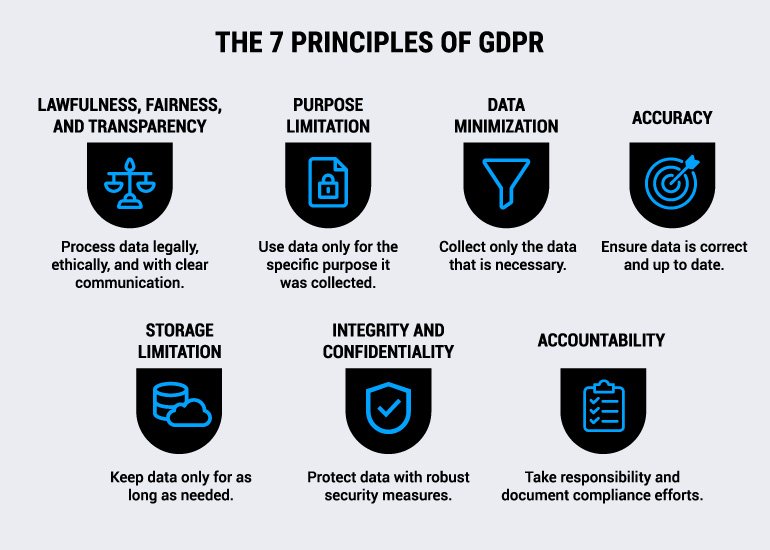
Lawfulness, Fairness, and Transparency means you must have a valid legal basis for processing data, treat people fairly, and be completely open about what you're doing with their information. No more hiding behind complex legal jargon or burying important details in endless terms of service documents.
Purpose Limitation requires that you collect data for specific, explicit, and legitimate purposes. You can't gather information "just in case" you might need it later. If you collected email addresses for newsletters, you can't suddenly start using them for targeted advertising without proper consent.
Data Minimization is the "less is more" principle of data protection. Only collect what you actually need, nothing more. It's like packing for a trip—bring what you need for your specific purpose, not everything you own.
Accuracy demands that you keep personal data accurate and up to date. This means implementing processes to correct or delete inaccurate information promptly.
Storage Limitation prevents data hoarding. You can only keep personal data as long as necessary for your stated purposes. Once you're done with it, you need to securely delete it.
Integrity and Confidentiality requires implementing appropriate security measures to protect data from unauthorized access, accidental loss, or malicious attacks.
Accountability is perhaps the most important principle—you must be able to demonstrate compliance with all other principles. It's not enough to follow the rules; you need to prove you're following them.
Essential GDPR Requirements Every Business Must Meet
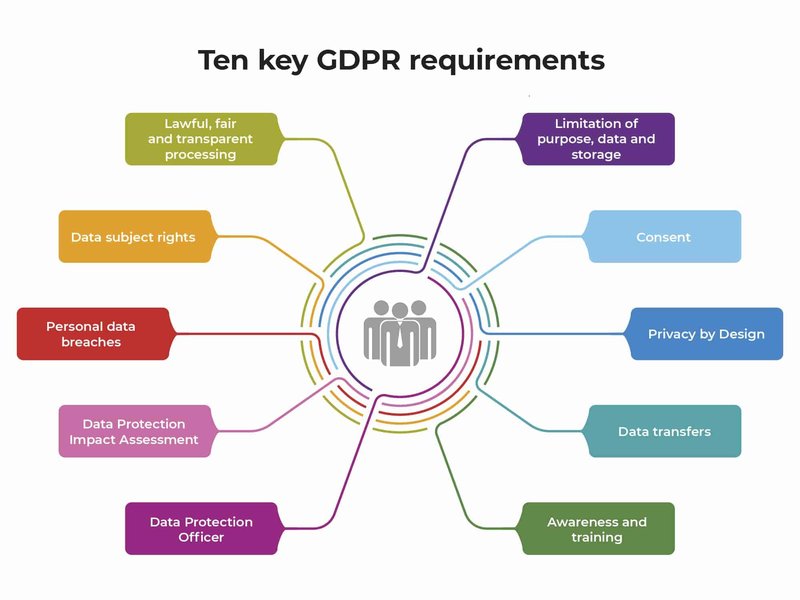
The requirements under GDPR can feel overwhelming, but they're designed to create a systematic approach to data protection. Let's break down the most critical ones:
Consent Management has become significantly more stringent. Consent must be freely given, specific, informed, and unambiguous. Those pre-checked boxes? They're history. Consent requests must be clearly separated from other terms and conditions, written in plain language, and easy to withdraw.
Individual Rights are at the heart of GDPR. People have the right to access their data, correct inaccuracies, erase their information (the famous "right to be forgotten"), restrict processing, data portability, and object to processing. You need systems in place to handle these requests efficiently.
Data Protection Impact Assessments (DPIAs) are required for high-risk processing activities. These assessments help you identify and minimize privacy risks before they become problems. Think of them as safety inspections for your data processing activities.
Breach Notification requirements mean you must report certain data breaches to supervisory authorities within 72 hours of becoming aware of them. If the breach poses high risks to individuals, you must also notify the affected people without undue delay.
Privacy by Design and by Default requires building data protection into your systems from the ground up, not as an afterthought. Your default settings should provide the highest level of privacy protection.
Record Keeping obligations mean maintaining detailed records of your processing activities. This documentation becomes crucial if regulators come knocking or if you need to demonstrate compliance.
Your GDPR Compliance Checklist: A Practical Roadmap
Achieving GDPR compliance requires systematic preparation and ongoing maintenance. Here's your essential checklist:
Data Audit and Mapping
- Conduct a comprehensive audit of all personal data you collect, process, and store
- Map data flows throughout your organization
- Identify the legal basis for each type of processing
- Document where data comes from and where it goes
Policy and Procedure Updates
- Review and update your privacy policy to ensure it's clear, comprehensive, and compliant
- Develop internal data protection policies and procedures
- Create processes for handling individual rights requests
- Establish data breach response procedures
Technical and Organizational Measures
- Implement appropriate security measures based on risk assessment
- Ensure data encryption where appropriate
- Set up access controls and user authentication systems
- Establish regular backup and recovery procedures
Staff Training and Awareness
- Train all employees on GDPR requirements and your organization's data protection policies
- Ensure staff understand how to handle data subject requests
- Create awareness about identifying and reporting potential data breaches
- Establish clear roles and responsibilities for data protection
Vendor and Third-Party Management
- Review contracts with all data processors and third-party vendors
- Ensure appropriate data processing agreements are in place
- Verify that vendors meet GDPR requirements
- Establish procedures for monitoring third-party compliance
Rights Management System
- Implement systems to handle data subject access requests
- Create processes for data correction, deletion, and portability
- Establish procedures for managing consent withdrawal
- Set up mechanisms for handling objections to processing
Building a Culture of Privacy Compliance
True GDPR compliance is about creating a culture where privacy protection becomes second nature. This means regular training sessions, clear communication channels for privacy concerns, and making data protection everyone's responsibility, not just the IT or legal department's job.
Regular reviews and updates are essential. GDPR compliance isn't a one-time project; it's an ongoing commitment. Technology changes, business practices evolve, and regulations may be updated. Your compliance program needs to adapt accordingly.
Conclusion
GDPR compliance is an opportunity to differentiate your business in an increasingly privacy-conscious world. Companies that handle data transparently and respectfully build stronger relationships with customers, reduce legal risks, and often discover operational efficiencies in the process.
The financial stakes are real, GDPR fines can reach up to €20 million or 4% of global annual turnover, whichever is higher. But beyond avoiding penalties, compliance demonstrates to customers, partners, and stakeholders that you take privacy seriously and can be trusted with sensitive information.
Don't let data protection and compliance feel overwhelming. Contact Regulance today and learn more.