PCI DSS 4.0 in 2026: What Should Be on Your Compliance Checklist?


Introduction
The payment security landscape has fundamentally changed, and businesses can no longer afford to treat compliance as an afterthought. With the mandatory transition to PCI DSS 4.0 now complete as of March 2025, organizations entering 2026 face a critical reality: your payment security infrastructure must meet the most rigorous standards the industry has ever seen.
PCI DSS 4.0 represents the most comprehensive update to the Payment Card Industry Data Security Standard in over a decade. The new framework addresses modern cybersecurity threats that didn't exist when earlier versions were written sophisticated ransomware attacks, cloud infrastructure vulnerabilities, and increasingly clever social engineering tactics that target your payment systems.
For businesses accepting credit and debit card payments, the stakes have never been higher. A single data breach can cost your company millions in fines, legal fees, and remediation expenses. Beyond the financial impact, the reputational damage can drive customers away permanently. Meanwhile, regulatory scrutiny continues to intensify, with payment brands and acquiring banks taking a harder line on non-compliance.
If you're running a small online retail operation or managing payment systems for a multinational enterprise, PCI DSS 4.0 compliance affects every aspect of how you handle cardholder data. The standard introduces expanded multi-factor authentication requirements, stricter vulnerability management protocols, and enhanced monitoring capabilities that demand both technical expertise and organizational commitment.
This guide breaks down everything you need to know about achieving and maintaining PCI DSS 4.0 compliance throughout 2026. We'll explore the core requirements, practical implementation strategies, hosting-specific controls, and actionable checklists that transform complex regulatory language into clear steps your team can follow.
What is PCI DSS?
The Payment Card Industry Data Security Standard (PCI DSS) is a set of security standards designed to ensure that all companies that accept, process, store, or transmit credit card information maintain a secure environment. Created in 2004 by major credit card brands like Visa, Mastercard, American Express, Discover, and JCB. PCI DSS has become the global benchmark for payment card data security.
PCI DSS is a comprehensive security framework that addresses multiple layers of protection. It's not just about firewalls and encryption; it encompasses everything from how you manage user access to how you monitor your networks for suspicious activity.
The standard applies to any organization that handles branded credit cards from the major card schemes, regardless of size or transaction volume. This includes merchants, processors, acquirers, issuers, and service providers. Even if you outsource payment processing, you're still responsible for ensuring PCI DSS compliance across your environment.
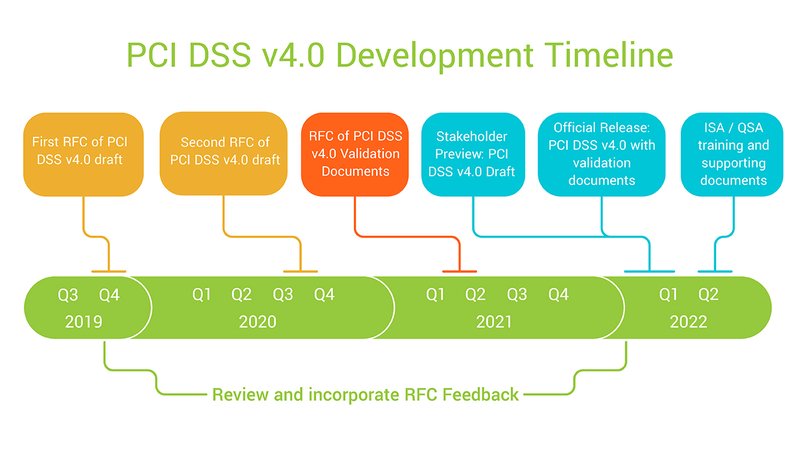
Version 4.0, which became the active standard in March 2024 with a transition period extending through March 2025, represents the most significant update to PCI DSS in over a decade. It introduces a more flexible, customized approach to security while addressing modern threats like cloud computing vulnerabilities, sophisticated malware, and evolving attack vectors.
The standard is built around twelve core requirements organized into six main objectives: building and maintaining secure networks, protecting cardholder data, maintaining vulnerability management programs, implementing strong access control measures, regularly monitoring and testing networks, and maintaining information security policies.
Understanding Cardholder Data
Before you can protect cardholder data, you need to understand exactly what it is and where it exists in your environment. Cardholder data (CHD) refers to any information printed, processed, transmitted, or stored in any form on a payment card.
At its core, cardholder data includes the Primary Account Number (PAN)—the long card number on the front of credit and debit cards. This is the crown jewel that attackers seek. When the PAN is combined with other elements like the cardholder's name, expiration date, or service code, it becomes even more valuable to cybercriminals.
Then there's Sensitive Authentication Data (SAD), which includes the full magnetic stripe data, the card verification code (the three or four-digit code on the back), and PINs or PIN blocks. Here's something critical: PCI DSS strictly prohibits storing SAD after transaction authorization, even if it's encrypted. This data is meant to authenticate cardholders during transactions and must be discarded immediately afterward.
Understanding where cardholder data flows through your systems is fundamental to PCI DSS compliance. This process, called data discovery, involves mapping out every location where CHD might exist: databases, file servers, backup systems, log files, and even employee workstations. Many organizations are surprised to discover cardholder data in unexpected places, spreadsheets, email archives, or development environments.
The concept of the Cardholder Data Environment (CDE) is central to PCI DSS. Your CDE consists of all system components that store, process, or transmit cardholder data, plus any systems that could impact the security of the CDE. By clearly defining your CDE boundaries, you can focus your security efforts and reduce compliance scope.
One of the smartest strategies for PCI DSS compliance is reducing the amount of cardholder data you handle. Consider tokenization, which replaces sensitive data with non-sensitive substitutes, or point-to-point encryption that protects data from the moment a card is swiped until it reaches the secure payment processor. The less cardholder data in your environment, the smaller your compliance burden.
Migrating to PCI DSS 4.0
If you're still operating under PCI DSS 3.2.1, you're running on borrowed time. The mandatory compliance date for version 4.0 was March 31, 2025, which means that by 2026, there's no longer any transition period, you need to be fully compliant with the latest standard.
The migration to PCI DSS 4.0 represents a fundamental shift in how the standard approaches security. Version 4.0 introduces the concept of "customized approaches," allowing organizations to implement security controls that achieve the stated objective of each requirement, even if they differ from the prescribed method. This flexibility is particularly valuable for organizations using innovative technologies or unique business models.
One significant change is the increased focus on continuous compliance rather than point-in-time assessments. PCI DSS 4.0 emphasizes ongoing monitoring, regular testing, and documented evidence that security controls remain effective throughout the year, not just during your annual assessment.
The new version also introduces numerous requirements that were previously considered best practices. For example, multi-factor authentication (MFA) is now required for all access into the CDE, not just remote access. This significantly expands the scope of MFA implementation for many organizations.
Another major shift involves the treatment of system components in the CDE. PCI DSS 4.0 requires more rigorous inventory management, with detailed documentation of all hardware and software components that could affect the security of cardholder data. You need to know not just what systems you have, but their purpose, location, and how they're protected.
The migration process should begin with a gap analysis comparing your current security posture against PCI DSS 4.0 requirements. This assessment identifies areas where you're already compliant and highlights gaps that need addressing. Prioritize the gaps based on risk and complexity, then develop a remediation roadmap with clear milestones.
Don't underestimate the importance of documentation during migration. PCI DSS 4.0 places greater emphasis on maintaining evidence of compliance activities. This means keeping detailed records of security testing, change management activities, access reviews, and risk assessments.
Engage stakeholders across your organization early in the migration process. PCI DSS compliance involves finance, operations, human resources, and executive leadership. Building cross-functional support ensures adequate resources and helps embed security into business processes.
How to Achieve PCI DSS 4.0 Compliance
Achieving PCI DSS 4.0 compliance requires a systematic approach that addresses all twelve core requirements while considering your organization's unique environment and risk profile.
Start by defining your cardholder data environment boundaries with precision. Document every system, application, database, and network segment that stores, processes, or transmits cardholder data. Include systems that connect to the CDE, as they can serve as pivot points for attackers. Creating detailed network diagrams and data flow maps provides visibility and helps assessors understand your environment.
Build and maintain secure networks by installing and maintaining network security controls to protect cardholder data. This means deploying firewalls at the perimeter of your CDE and between internal network segments. Configure these firewalls according to vendor best practices and PCI DSS requirements, restricting both inbound and outbound traffic to only what's necessary for business operations.
Encryption is non-negotiable for protecting cardholder data. Implement strong cryptography for data transmission across open, public networks and consider encrypting stored cardholder data as well. PCI DSS 4.0 provides specific guidance on cryptographic protocols and key strengths, phasing out older, vulnerable algorithms like early SSL versions and weak encryption ciphers.
Vulnerability management takes center stage in version 4.0. Deploy and maintain anti-malware solutions on all systems commonly affected by malware, particularly those in the CDE. Keep these solutions current and actively running, with logs regularly reviewed. Equally important is maintaining secure systems and applications through regular patching and updates. Critical security patches must be installed within one month of release.
Access control measures ensure that only authorized individuals can access cardholder data. Implement the principle of least privilege, granting users only the minimum access necessary to perform their jobs. Every user should have a unique ID, and you must be able to trace all actions back to specific individuals for accountability.
Multi-factor authentication has expanded significantly under PCI DSS 4.0. It's now required for all access into the CDE, not just remote access, and for all administrative access to system components. This means implementing MFA for technicians, administrators, and anyone else with privileged access, a requirement that catches many organizations off guard during migration.
Regular monitoring and testing form the backbone of ongoing compliance. Implement logging mechanisms that track all access to cardholder data and system components, then regularly review these logs for anomalies. Conduct vulnerability scans at least quarterly and after significant changes to your environment. Annual penetration testing by qualified assessors helps identify vulnerabilities that automated scans might miss.
Finally, maintain comprehensive information security policies that address all PCI DSS requirements and are communicated to all personnel. These policies should be living documents that evolve with your business and the threat landscape, reviewed at least annually and updated as needed.
Hosting Controls for PCI DSS 4.0
For organizations that host their payment applications and cardholder data environments in cloud or data center facilities, understanding hosting-specific controls is crucial. PCI DSS 4.0 introduces enhanced requirements for hosting providers and the shared responsibility model.
Physical security remains paramount even in the cloud era. If you operate your own data centers, implement strict physical access controls including video surveillance, access logs, and visitor management. Limit physical access to the CDE to only authorized personnel, with multiple authentication factors required for the most sensitive areas.
For organizations using Infrastructure-as-a-Service (IaaS) or Platform-as-a-Service (PaaS), understanding where your responsibilities begin and the provider's end is essential. While the hosting provider typically handles physical security and infrastructure protection, you remain responsible for securing your applications, data, and operating systems.
Network segmentation becomes more complex in hosted environments. You must ensure that your CDE is isolated from other customers' environments and from your own non-CDE systems. In cloud environments, this often involves virtual private clouds (VPCs), security groups, and network access control lists (NACLs) that enforce strict segmentation policies.
Hypervisor security deserves special attention in virtualized hosting environments. The hypervisor layer represents a single point of failure that, if compromised, could affect multiple virtual machines. Implement strong access controls for hypervisor management interfaces and keep hypervisor software patched and updated according to vendor recommendations.
Container security has emerged as a significant consideration for organizations using containerized applications. PCI DSS 4.0 requires that containers handling cardholder data be configured securely, with minimal services running, strong access controls, and regular vulnerability scanning of container images.
API security is another hosting control that's gained prominence. Many hosted payment applications rely heavily on APIs for functionality. These APIs must be protected with strong authentication, encrypted transmission, input validation, and rate limiting to prevent abuse.
Backup and disaster recovery procedures take on additional complexity in hosted environments. Ensure that backup data containing cardholder information receives the same level of protection as production data. Encrypt backups, restrict access, and regularly test restoration procedures to verify that you can recover from various failure scenarios.
Change control processes must account for the dynamic nature of hosted environments where infrastructure can be provisioned or modified through code. Implement infrastructure-as-code practices with proper version control, testing, and approval workflows before changes are deployed to production environments.
PCI DSS 4.0 Hosting Checklist
This practical checklist helps organizations verify their hosting environment meets PCI DSS 4.0 requirements:
Infrastructure and Network Security
- Inventory all system components in your hosted CDE, including virtual machines, containers, databases, and network devices
- Implement network segmentation separating the CDE from other environments with firewalls or virtual network controls
- Configure firewall rules following the principle of least privilege, denying all traffic by default and explicitly allowing only necessary connections
- Deploy intrusion detection and prevention systems (IDS/IPS) monitoring traffic entering and leaving the CDE
- Ensure all administrative access to hosted infrastructure uses encrypted protocols (SSH, TLS 1.2 or higher)
- Document network architecture with diagrams showing all connections, trust boundaries, and data flows
Access Controls
- Implement multi-factor authentication for all access to the CDE, including administrative consoles and jump servers
- Create unique user accounts for each administrator and employee with access to hosted systems
- Apply role-based access controls limiting privileges to the minimum necessary for job functions
- Review user access rights quarterly and after personnel changes
- Restrict physical access to data centers or server rooms to authorized personnel only (if self-hosted)
- Maintain access logs for all entry points to hosted environments
Data Protection
- Encrypt all cardholder data in transit using strong cryptography (TLS 1.2 or higher)
- Implement encryption or tokenization for stored cardholder data when business requirements necessitate storage
- Ensure cryptographic keys are stored securely, separate from encrypted data, with restricted access
- Prohibit storage of sensitive authentication data (full magnetic stripe, CVV2, PIN) after authorization
- Mask PAN when displayed, showing only the minimum digits necessary for business purposes
- Configure systems to automatically remove or securely delete cardholder data that exceeds retention requirements
Monitoring and Logging
- Enable comprehensive logging on all system components in the CDE, capturing user access, administrative actions, and security events
- Centralize log collection in a secure logging system that prevents tampering
- Review logs at least daily for suspicious activity, either manually or through automated alerting
- Retain audit logs for at least one year, with a minimum of three months immediately available for analysis
- Implement file integrity monitoring (FIM) on critical system files, configuration files, and content directories
- Synchronize all system clocks using Network Time Protocol (NTP) for accurate log correlation
Vulnerability Management
- Deploy anti-malware solutions on all systems commonly affected by malware, ensuring real-time protection and regular updates
- Conduct quarterly vulnerability scans by an Approved Scanning Vendor (ASV) for external-facing systems
- Perform internal vulnerability scans at least quarterly and after significant changes
- Remediate high-risk and critical vulnerabilities according to PCI DSS timelines
- Maintain an inventory of all software and system components, tracking patch levels and versions
- Establish a formal patch management process ensuring critical security patches are applied within one month
Application Security
- Develop payment applications following secure coding guidelines that address common vulnerabilities
- Conduct application security testing before deployment and after significant changes
- Implement input validation on all system components to prevent injection attacks
- Use parameterized queries or prepared statements for all database access
- Review custom application code for security vulnerabilities before release to production
- Maintain separate development, testing, and production environments with distinct data sets
Hosting Provider Validation
- Verify your hosting provider maintains their own PCI DSS compliance if they have access to your cardholder data
- Review your hosting provider's Attestation of Compliance (AOC) or responsibility matrix
- Understand the shared responsibility model and document which controls the provider manages versus your responsibilities
- Include hosting provider security in your annual risk assessment
- Establish clear communication channels with the provider for security incidents and changes
- Ensure service level agreements (SLAs) address security requirements and incident response timelines
Business Continuity
- Create and document disaster recovery and business continuity plans for your hosted CDE
- Perform encrypted backups of cardholder data at least weekly
- Store backup media in a secure, separate location from primary systems
- Test restoration procedures at least annually to verify backup integrity
- Document recovery time objectives (RTO) and recovery point objectives (RPO)
- Ensure backup systems receive the same security controls as production environments
Incident Response
- Develop and maintain an incident response plan addressing potential security breaches
- Assign roles and responsibilities for incident response team members
- Establish procedures for detecting, containing, and analyzing security incidents
- Implement mechanisms for timely reporting of security incidents to payment brands and relevant stakeholders
- Conduct annual testing or tabletop exercises of the incident response plan
- Review and update the incident response plan after significant incidents or changes to the environment
Documentation and Policies
- Create and maintain PCI DSS security policies addressing all requirement areas
- Document all security procedures with step-by-step instructions for implementation
- Conduct annual security awareness training for all personnel with access to cardholder data
- Maintain a formal risk assessment process updated at least annually
- Keep evidence of compliance activities for audit purposes
- Review all policies and procedures at least annually and update as necessary
Frequently Asked Questions
What happens if we're not PCI DSS compliant in 2026?
Non-compliance can result in significant consequences including fines ranging from $5,000 to $100,000 per month, increased transaction fees, restrictions on accepting card payments, and in severe cases, complete inability to process credit cards. Beyond financial penalties, data breaches resulting from non-compliance can lead to legal liability, regulatory scrutiny, and severe reputational damage that impacts customer trust and business relationships.
Do small businesses need to comply with PCI DSS 4.0?
Yes, PCI DSS applies to all organizations that accept, process, store, or transmit credit card information, regardless of size. However, compliance requirements scale based on transaction volume. Smaller merchants with fewer annual transactions typically qualify for simpler validation methods like Self-Assessment Questionnaires (SAQs) rather than full onsite assessments. The standard recognizes that a small online retailer processing 100 transactions annually faces different risks than an enterprise handling millions.
How often do we need to validate PCI DSS compliance?
Organizations must validate compliance annually, though the specific validation method depends on your merchant level. Additionally, you must conduct quarterly vulnerability scans for external-facing systems and maintain ongoing compliance throughout the year. PCI DSS 4.0 emphasizes continuous compliance monitoring rather than treating it as a once-yearly checkbox exercise. Any significant changes to your environment may require re-validation before your annual assessment date.
Can we outsource PCI DSS compliance entirely?
While you can outsource payment processing to reduce your compliance scope, you cannot completely outsource compliance responsibility. As the merchant or service provider accepting card payments, you remain ultimately accountable for ensuring that cardholder data is protected throughout its lifecycle. Even when using third-party processors, you must ensure they're PCI DSS compliant and that data is secure during transmission to their systems.
What's the difference between PCI DSS compliance and certification?
PCI DSS doesn't offer "certification" in the traditional sense. Organizations demonstrate compliance through validation by a Qualified Security Assessor (QSA) or through Self-Assessment Questionnaires, resulting in an Attestation of Compliance (AOC). Some companies claim to be "PCI certified," but the correct terminology is "PCI DSS compliant" based on their latest assessment. Compliance is an ongoing state, not a one-time certification.
How does PCI DSS 4.0 address cloud computing?
Version 4.0 includes specific guidance for cloud environments, recognizing that many organizations now host payment applications in Infrastructure-as-a-Service, Platform-as-a-Service, or Software-as-a-Service environments. The standard clarifies the shared responsibility model, addresses container security, and provides guidance on securing API-based integrations. Organizations must understand which security controls the cloud provider manages and which remain their responsibility.
What are the new requirements in PCI DSS 4.0 that didn't exist in version 3.2.1?
Key new requirements include expanded multi-factor authentication for all CDE access (not just remote), enhanced authentication for e-commerce payment pages, automated technical solutions for detecting and preventing web-based attacks, and targeted risk analyses for cryptographic cipher suites and protocols. Many former "best practices" from version 3.2.1 became mandatory requirements in 4.0, giving organizations a transition period through March 2025 to implement them.
How long does it take to achieve PCI DSS 4.0 compliance?
The timeline varies dramatically based on your starting point, organization size, and complexity of your cardholder data environment. A small business with limited infrastructure might achieve compliance in 3-6 months, while large enterprises with complex, distributed environments often require 12-24 months for initial compliance. The key is starting early, conducting a thorough gap analysis, and allocating adequate resources to remediation efforts.
What's the role of a Qualified Security Assessor (QSA)?
QSAs are independent security organizations certified by the PCI Security Standards Council to validate an organization's compliance with PCI DSS. They conduct onsite assessments, review security controls and documentation, perform testing, and issue Reports on Compliance (ROC) and Attestations of Compliance (AOC). Level 1 merchants and certain service providers typically require QSA assessments, though smaller organizations may self-assess.
How does PCI DSS 4.0 handle mobile payment acceptance?
Mobile payments are explicitly addressed in PCI DSS 4.0 through specific requirements for payment applications running on mobile devices. Organizations using mobile point-of-sale (mPOS) solutions must ensure these applications are PA-DSS or PCI SSC-listed, implement proper encryption, prevent unauthorized access to cardholder data, and maintain secure configurations. The standard recognizes that smartphones and tablets present unique security challenges compared to traditional payment terminals.
Conclusion
PCI DSS 4.0 compliance in 2026 entails building a security-first culture that protects your customers' most sensitive information. The standard has evolved to address modern threats and technologies, providing organizations with both prescriptive requirements and flexible approaches to achieve security objectives.
The journey to compliance can seem overwhelming, especially for organizations dealing with complex, distributed environments or those migrating from version 3.2.1. However, approaching PCI DSS systematically, defining your cardholder data environment, implementing appropriate controls, monitoring continuously, and documenting thoroughly makes the process manageable and ultimately strengthens your overall security posture.
Remember that PCI DSS compliance is not a destination but an ongoing commitment. The threat landscape constantly evolves, with attackers developing sophisticated techniques to compromise payment systems. Organizations that view compliance as a continuous improvement process rather than an annual burden are better positioned to protect cardholder data and maintain customer trust.
For organizations hosting payment applications and cardholder data in cloud or data center environments, the complexity increases but so do the opportunities. Modern infrastructure enables powerful security capabilities like automated compliance monitoring, infrastructure-as-code security validation, and real-time threat detection that were impractical just a few years ago.
As we progress through 2026 and beyond, the organizations that thrive will be those that embed security into their DNA, viewing PCI DSS not as a compliance burden but as a framework for operational excellence. The investment in security controls, monitoring systems, and trained personnel pays dividends not just in compliance validation but in reduced breach risk, enhanced customer confidence, and competitive advantage.
Don't wait until your next assessment deadline to address compliance gaps. Contact Regulance today for a complimentary PCI DSS readiness assessment. Protect your customers. Protect your business. Partner with Regulance for PCI DSS compliance that works.