Is SIEM the Key to GDPR Compliance? Here’s How It Strengthens Data Protection


Introduction
As regulatory scrutiny intensifies, organizations handling European Union citizen data face a critical challenge: achieving and maintaining GDPR compliance while managing increasingly complex IT environments. The General Data Protection Regulation has fundamentally transformed how businesses approach data privacy, introducing stringent requirements and substantial penalties for non-compliance. Meanwhile, Security Information and Event Management systems have emerged as powerful allies in this compliance journey, offering sophisticated capabilities that align remarkably well with GDPR mandates.
The intersection of SIEM technology and GDPR compliance represents more than just a technical solution to a regulatory problem. It embodies a strategic approach to data protection that benefits organizations, customers, and the broader digital ecosystem. As cyber threats evolve and regulatory expectations grow, understanding how SIEM supports GDPR compliance has become essential knowledge for security professionals, compliance officers, and business leaders alike.
This article explores the synergy between SIEM and GDPR, revealing how organizations can leverage advanced security monitoring to meet their regulatory obligations while simultaneously strengthening their overall security posture.
What is SIEM?
Security Information and Event Management, commonly known as SIEM, represents a comprehensive approach to security management that combines two critical functions: security information management and security event management. SIEM technology aggregates, analyzes, and correlates security data from across an organization's entire IT infrastructure in real-time.
A SIEM solution collects log data from numerous sources including servers, databases, applications, network devices, firewalls, antivirus software, and intrusion detection systems. This centralized collection creates a holistic view of an organization's security landscape, transforming disparate data points into actionable intelligence. The system continuously monitors this information, applying sophisticated analytics and correlation rules to identify patterns that might indicate security incidents, policy violations, or compliance issues.
Modern SIEM platforms employ advanced technologies such as machine learning and behavioral analytics to detect anomalies that traditional signature-based systems might miss. They can identify unusual access patterns, detect potential insider threats, track privilege escalation attempts, and recognize the subtle indicators of advanced persistent threats. Beyond detection, SIEM systems provide comprehensive reporting capabilities, enabling security teams to investigate incidents thoroughly, understand attack timelines, and generate compliance reports.
The value of SIEM extends beyond immediate threat detection. These systems maintain detailed audit trails of security events, user activities, and system changes over extended periods. This historical data proves invaluable for forensic investigations, trend analysis, and demonstrating compliance with various regulatory frameworks. SIEM dashboards present complex security data in intuitive visualizations, allowing security professionals to quickly assess their organization's security posture and respond to emerging threats.
What is GDPR?
The General Data Protection Regulation, which took effect on May 25, 2018, represents the most comprehensive data protection legislation ever enacted. This European Union regulation fundamentally restructured how organizations worldwide must handle the personal data of EU citizens and residents, regardless of where the processing organization is located.
GDPR establishes strict principles for data processing, including lawfulness, fairness, transparency, purpose limitation, data minimization, accuracy, storage limitation, integrity, and confidentiality. The regulation grants individuals unprecedented control over their personal information, including rights to access their data, correct inaccuracies, request deletion (the right to be forgotten), restrict processing, data portability, and object to certain processing activities.
Organizations subject to GDPR face substantial obligations. They must implement appropriate technical and organizational measures to ensure data security, conduct data protection impact assessments for high-risk processing activities, maintain detailed records of processing activities, and report certain data breaches to supervisory authorities within 72 hours. The regulation also introduced the concepts of Privacy by Design and Privacy by Default, requiring organizations to consider data protection from the earliest stages of system development.
The consequences of non-compliance are severe. GDPR authorizes fines up to 20 million euros or 4% of annual global turnover, whichever is higher, for serious violations. Beyond financial penalties, non-compliance can result in reputational damage, loss of customer trust, and competitive disadvantage. The regulation applies extraterritorially, meaning any organization processing EU citizen data must comply, regardless of geographic location.
GDPR's impact extends far beyond Europe. It has inspired similar legislation globally and raised the baseline for data protection practices worldwide. For organizations, GDPR compliance has become not just a legal obligation but a competitive differentiator and trust signal to customers increasingly concerned about how their data is handled.
How SIEM Can Help with Compliance
SIEM technology addresses multiple compliance challenges simultaneously, making it an invaluable tool for organizations navigating complex regulatory landscapes. The relationship between SIEM and compliance stems from the system's fundamental capabilities: comprehensive data collection, centralized monitoring, detailed logging, and automated reporting.
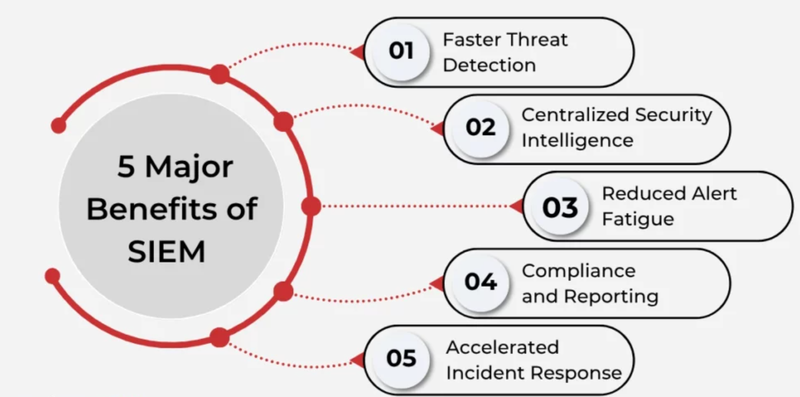
SIEM provides the visibility necessary for compliance. Regulations like GDPR require organizations to know what data they have, where it resides, who accesses it, and how it's protected. SIEM systems offer this visibility by monitoring data flows across the entire IT environment, tracking access attempts, and documenting data handling activities. This comprehensive oversight enables organizations to demonstrate the accountability that regulators demand.
The automated nature of SIEM significantly reduces the compliance burden. Manual compliance efforts are resource-intensive, error-prone, and often fail to keep pace with dynamic IT environments. SIEM automates the collection and analysis of security events, continuously monitoring for compliance violations and generating alerts when policies are breached. This automation ensures consistent enforcement of security policies and reduces the risk of human oversight.
SIEM's reporting capabilities directly support compliance documentation requirements. Most regulations require organizations to produce evidence of their security controls, incident response activities, and policy enforcement. SIEM systems generate detailed compliance reports that map security events to specific regulatory requirements, making audits less stressful and more efficient. These reports provide auditors with the evidence they need while saving security teams countless hours of manual report preparation.
Furthermore, SIEM enables proactive compliance management. Rather than discovering compliance gaps during audits, organizations can use SIEM to continuously assess their compliance posture, identify vulnerabilities before they're exploited, and address issues before they escalate into violations. This proactive approach transforms compliance from a periodic checkbox exercise into an ongoing security practice.
How Does SIEM Address GDPR Requirements?
The alignment between SIEM capabilities and GDPR requirements is remarkably strong, addressing multiple articles and obligations within the regulation. Understanding these connections helps organizations leverage SIEM effectively for GDPR compliance.
Data Breach Detection and Notification
GDPR Article 33 requires organizations to report certain personal data breaches to supervisory authorities within 72 hours of becoming aware of them. SIEM systems excel at breach detection through continuous monitoring and anomaly detection. When suspicious activities occur, unauthorized access attempts, unusual data transfers, or privilege escalation SIEM generates immediate alerts. The detailed logging provides security teams with the information needed to assess whether a breach has occurred, determine its scope, and gather the details required for breach notifications.
Access Controls and Monitoring
GDPR requires organizations to implement appropriate technical measures to protect personal data. SIEM supports this through comprehensive access monitoring, tracking who accesses personal data, when, from where, and what actions they perform. The system can detect unauthorized access attempts, identify compromised credentials, and alert on suspicious user behavior patterns. This capability directly supports GDPR's requirements for data security and accountability.
Audit Trails and Accountability
Article 5(2) of GDPR introduces the principle of accountability, requiring organizations to demonstrate compliance with data protection principles. SIEM systems maintain detailed, tamper-evident logs of all security-relevant events, creating comprehensive audit trails. These logs document data processing activities, access events, security incidents, and system changes, providing the evidence needed to demonstrate compliance during audits or investigations.
Data Protection by Design and Default
GDPR Article 25 requires implementing appropriate technical measures to ensure data protection principles are integrated into processing activities. SIEM contributes to this through continuous security monitoring, ensuring that security controls remain effective and detecting when protection measures fail. The system's ability to identify misconfigurations, unauthorized changes, or policy violations helps maintain the security posture required by GDPR.
Data Subject Rights Management
When individuals exercise their GDPR rights requesting access to their data, demanding deletion, or restricting processing organizations must be able to locate and manage that data appropriately. SIEM's data tracking capabilities help organizations understand where personal data resides and monitor actions taken in response to data subject requests, ensuring compliance with these obligations.
Third-Party Risk Management
GDPR holds data controllers accountable for their processors' security practices. SIEM can monitor interactions with third-party systems, detect anomalous activities involving external partners, and ensure that data shared with processors remains protected according to GDPR standards.
What Are the Benefits of Using SIEM for GDPR Compliance?
Implementing SIEM for GDPR compliance delivers benefits that extend far beyond merely checking regulatory boxes. Organizations that strategically deploy SIEM discover improvements across multiple dimensions of their security and business operations.
Enhanced Security Posture
While GDPR compliance drives the initial investment, the security improvements from SIEM implementation often provide the greatest long-term value. SIEM's real-time threat detection capabilities identify attacks faster, enabling quicker response and minimizing potential damage. The comprehensive visibility into security events helps organizations understand their threat landscape, identify vulnerabilities, and prioritize security investments effectively.
Reduced Compliance Costs
Though SIEM implementation requires upfront investment, it ultimately reduces compliance costs through automation and efficiency gains. Manual log collection, analysis, and report generation consume significant staff time and remain vulnerable to human error. SIEM automates these processes, freeing security professionals to focus on strategic initiatives rather than repetitive compliance tasks. The system's ability to address multiple compliance frameworks simultaneously further amplifies cost savings for organizations subject to various regulations.
Faster Incident Response
GDPR's 72-hour breach notification requirement creates intense time pressure during security incidents. SIEM accelerates incident response by immediately detecting suspicious activities, providing security teams with detailed contextual information, and enabling rapid investigation. The centralized log repository eliminates the need to manually collect data from disparate systems, while correlation capabilities help investigators quickly understand attack patterns and scope.
Improved Audit Outcomes
Audits become significantly less stressful with SIEM in place. The system's comprehensive logging and reporting capabilities provide auditors with the evidence they need in formats they can easily understand. Rather than scrambling to compile logs and documentation during audit preparation, organizations can generate compliance reports on demand, demonstrating continuous compliance rather than point-in-time assessments.
Risk Mitigation
Beyond preventing breaches, SIEM helps organizations identify and address security weaknesses before they're exploited. The system's continuous monitoring detects misconfigurations, policy violations, and emerging vulnerabilities, enabling proactive risk management. This preventive approach reduces the likelihood of data breaches and the substantial costs associated with them, including regulatory fines, legal expenses, customer notification, credit monitoring services, and reputational damage.
Data-Driven Decision Making
SIEM provides security leadership with actionable intelligence for strategic planning. Trend analysis reveals patterns in security events, helping organizations understand their risk profile, identify areas requiring additional investment, and measure the effectiveness of security controls. This data-driven approach enables more effective resource allocation and stronger security programs.
Competitive Advantage
In markets where customers increasingly value data privacy, demonstrating robust security practices and GDPR compliance provides competitive differentiation. SIEM implementation signals serious commitment to data protection, potentially attracting security-conscious customers and partners while supporting sales processes that require security assessments.
Best Practices for Implementing SIEM for GDPR Compliance
Successfully implementing SIEM for GDPR compliance requires strategic planning and careful execution. Organizations that follow proven best practices maximize their return on investment while avoiding common pitfalls.
Define Clear Objectives and Scope
Begin by clearly articulating what you want to achieve with SIEM beyond basic compliance. Identify the specific GDPR requirements you need to address, the systems and data sources you must monitor, and the key performance indicators that will measure success. This clarity guides vendor selection, implementation decisions, and resource allocation while ensuring alignment between technical capabilities and business objectives.
Conduct Comprehensive Data Discovery
Before implementing SIEM, thoroughly understand your data landscape. Identify where personal data resides, how it flows through your systems, who accesses it, and what security controls protect it. This discovery process, required by GDPR regardless of SIEM implementation, ensures you monitor the right systems and configure appropriate detection rules.
Prioritize Data Sources Strategically
While comprehensive monitoring is ideal, practical constraints often require prioritization. Focus initially on systems that process sensitive personal data, critical infrastructure components, authentication systems, and internet-facing applications. Gradually expand coverage as your SIEM program matures, ensuring that high-risk areas receive attention first.
Develop Meaningful Use Cases
Generic SIEM deployments that simply collect logs without clear use cases provide limited value. Develop specific use cases aligned with GDPR requirements: detecting unauthorized access to personal data, identifying data exfiltration attempts, monitoring privileged account activities, tracking data subject request fulfillment, and detecting system misconfigurations. Each use case should define the data sources needed, the correlation rules required, and the response procedures when alerts trigger.
Tune Continuously to Reduce False Positives
Initial SIEM deployments often generate overwhelming numbers of alerts, leading to alert fatigue and missed genuine threats. Invest time in tuning correlation rules, adjusting alert thresholds, and refining detection logic based on your environment's normal behavior patterns. Continuous tuning improves detection accuracy while reducing the noise that overwhelms security teams.
Establish Clear Response Procedures
SIEM alerts are only valuable if they trigger appropriate responses. Develop and document incident response procedures for different alert types, clearly defining roles, responsibilities, escalation paths, and communication protocols. Ensure security teams understand how to investigate alerts, assess their severity, and take appropriate remedial actions.
Integrate with Broader Security Ecosystem
SIEM should not operate in isolation. Integrate it with other security tools such as identity management systems, vulnerability scanners, threat intelligence platforms, and security orchestration tools. These integrations enhance detection capabilities, streamline response workflows, and create a more cohesive security architecture.
Invest in Skills Development
SIEM platforms are powerful but complex. Ensure your team has the skills to operate the system effectively through training, certifications, and hands-on practice. Consider whether managed SIEM services might supplement internal capabilities, particularly for organizations with limited security staff.
Regularly Review and Update
GDPR compliance and security threats evolve continuously. Schedule regular reviews of your SIEM configuration, correlation rules, monitored systems, and response procedures. Update detection logic to address emerging threats, adjust monitoring to reflect infrastructure changes, and refine processes based on lessons learned from incidents and near-misses.
Document Everything
Maintain comprehensive documentation of your SIEM implementation, including system architecture, data sources, correlation rules, use cases, incident response procedures, and configuration changes. This documentation proves invaluable during audits, helps onboard new team members, and supports troubleshooting and optimization efforts.
FAQs
Is SIEM mandatory for GDPR compliance?
GDPR does not explicitly mandate SIEM implementation. However, the regulation requires organizations to implement appropriate technical and organizational measures to ensure data security. For many organizations, particularly those with complex IT environments or processing large volumes of personal data, SIEM represents one of the most effective ways to meet these security requirements and demonstrate the accountability GDPR demands.
How does SIEM help with the 72-hour breach notification requirement?
SIEM significantly aids breach notification compliance through rapid detection of security incidents, comprehensive logging that helps assess breach scope, and detailed information that supports notification decisions. The system's real-time monitoring capabilities alert security teams to potential breaches quickly, while its centralized logging provides the evidence needed to determine what data was affected, how many individuals are impacted, and what information must be included in breach notifications.
Can small businesses benefit from SIEM for GDPR compliance?
Absolutely. While enterprise-grade SIEM platforms may exceed small business budgets and capabilities, cloud-based SIEM solutions and managed security services offer affordable options that deliver similar benefits. Small businesses subject to GDPR face the same compliance obligations as larger organizations, and proportionate SIEM solutions help them meet these requirements without overwhelming limited IT resources.
What personal data should SIEM monitor?
SIEM should monitor systems that process, store, or transmit personal data covered by GDPR. This includes customer databases, authentication systems, email servers, file shares, web applications collecting user information, and any other systems handling EU citizen data. However, SIEM should be configured to avoid unnecessarily collecting or storing the personal data itself, focusing instead on metadata about access and activities related to that data.
How long should SIEM logs be retained for GDPR purposes?
GDPR does not specify exact retention periods for security logs. Organizations should retain logs long enough to detect and investigate security incidents, meet their legal obligations, and demonstrate compliance during audits. Many organizations retain SIEM logs for 12 to 24 months, though this varies based on industry regulations, risk assessments, and practical storage considerations. The key is establishing a defensible retention policy that balances security needs with GDPR's storage limitation principle.
Does SIEM automatically ensure GDPR compliance?
No. SIEM is a powerful tool that supports GDPR compliance, but it does not automatically ensure it. Organizations must properly configure SIEM systems, develop appropriate use cases, establish response procedures, and integrate SIEM into broader compliance programs. Technology alone cannot achieve compliance; it must be combined with appropriate policies, processes, and human expertise.
Conclusion
The convergence of SIEM technology and GDPR compliance represents a strategic opportunity for organizations to simultaneously strengthen security and meet regulatory obligations. SIEM's comprehensive monitoring, detailed logging, automated analysis, and robust reporting capabilities address multiple GDPR requirements while delivering security benefits that extend far beyond compliance.
Organizations implementing SIEM for GDPR discover that compliance becomes a natural byproduct of strong security practices rather than a separate burden. The visibility, detection capabilities, and incident response improvements SIEM provides create a security foundation that protects against evolving threats while satisfying regulatory expectations. The investment in SIEM pays dividends through reduced breach risk, lower compliance costs, improved audit outcomes, and enhanced customer trust.
However, success requires more than simply deploying technology. Organizations must approach SIEM implementation strategically, clearly defining objectives, prioritizing critical data sources, developing meaningful use cases, and continuously refining their programs. The combination of appropriate technology, skilled personnel, well-defined processes, and ongoing commitment creates SIEM programs that effectively support GDPR compliance while advancing broader security goals.
As data protection regulations continue evolving globally and cyber threats grow more sophisticated, the importance of integrated security and compliance approaches will only increase. SIEM stands at the center of this integration, providing the capabilities organizations need to protect personal data, demonstrate accountability, and maintain stakeholder trust in an increasingly regulated digital world.
Take Control of Your GDPR Compliance Journey with Regulance. Contact us now to schedule your consultation and take the first step toward comprehensive, sustainable GDPR compliance.