Building Customer Trust Through Compliance: The Foundation of Modern Business Success


Customer is the cornerstone of sustainable business growth. Yet building and maintaining that trust has become increasingly complex as consumers become more aware of their rights and data privacy. The secret weapon? Compliance. When done right, compliance transforms from a regulatory burden into a competitive advantage that builds unshakeable customer trust.
Why Customer Trust Matters
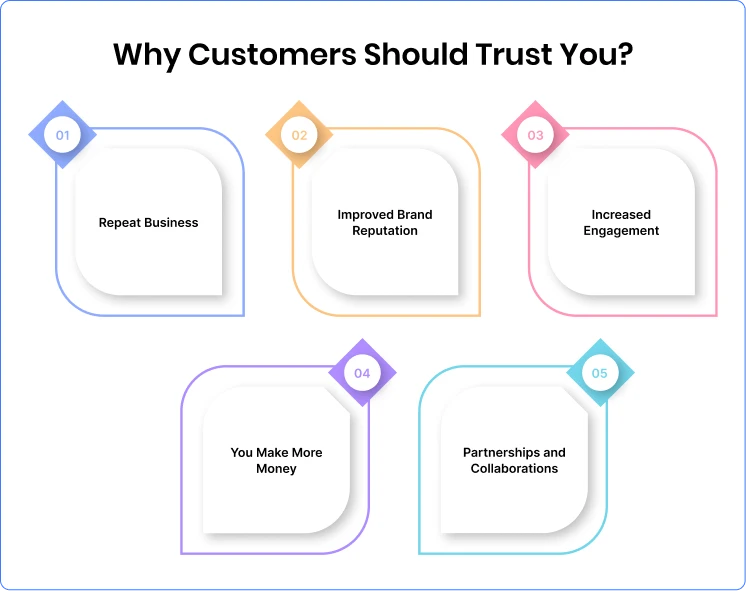
We're living through what many experts call a "trust recession." A recent study by Edelman revealed that only 58% of consumers trust the companies they buy from, a number that should alarm every business leader. This erosion of trust isn't happening in a vacuum; it's directly tied to high-profile data breaches, privacy violations, and corporate scandals that dominate headlines.
Consider the fallout from Facebook's Cambridge Analytica scandal in 2018. The social media giant lost not just $119 billion in market value overnight, but more importantly, it lost something far harder to rebuild: customer trust. Even today, Facebook (now Meta) continues to grapple with trust issues that trace back to that compliance failure.
The financial impact is staggering. Research from PwC shows that 32% of customers will walk away from a brand they love after just one bad experience. When that experience involves a breach of trust, whether through data misuse, privacy violations, or regulatory non-compliance, the damage multiplies exponentially.
The Compliance-Trust Connection
Here's where many businesses get it wrong: they view compliance as a checkbox exercise, something to grudgingly manage to avoid penalties. But forward-thinking companies understand that compliance is actually a trust-building engine in disguise.
When customers see that a company takes compliance seriously, they're witnessing something profound: a business that values their rights, protects their data, and operates with integrity. This isn't just theoretical, it's backed by hard data.
The Trust Dividend: Real Numbers, Real Impact
Companies with high trust scores consistently outperform their competitors:
- Revenue Growth: High-trust companies experience 2.5x higher revenue growth compared to their peers
- Stock Performance: Trust leaders see 4x better stock returns than the market average
- Customer Retention: Businesses with strong trust ratings enjoy 90% customer retention rates versus 33% for low-trust companies
- Price Premium: Customers willingly pay 15-20% more for products from companies they trust
These aren't just correlations, they represent the tangible business value of customer trust built through robust compliance practices.
Real-World Success Stories: Compliance as a Trust Builder
Apple: Privacy as a Competitive Advantage
Apple's approach to customer trust through compliance offers a masterclass in turning regulatory requirements into business advantages. When GDPR went into effect in 2018, while many companies scrambled to avoid penalties, Apple embraced the regulations as validation of their existing privacy-first approach.
CEO Tim Cook's public stance that "privacy is a fundamental human right" wasn't just marketing speak, it was backed by concrete compliance measures:
- Transparent data collection practices
- User control over personal information
- Regular privacy audits and certifications
- Clear, understandable privacy policies
The result? Apple's brand trust scores consistently rank among the highest in the tech industry, translating directly into customer loyalty and premium pricing power.
Salesforce: Building Trust Through Transparency
Salesforce's approach to customer trust demonstrates how compliance can become a differentiator in B2B markets. Their comprehensive compliance framework includes:
- SOC 2 Type II certifications
- ISO 27001 compliance
- Regular third-party security assessments
- Transparent incident reporting
This commitment to compliance helped Salesforce build such strong customer trust that their Net Promoter Score (NPS) consistently exceeds 50, well above the industry average of 31 for software companies.
The Compliance Framework for Customer Trust
Building customer trust through compliance requires a strategic framework that goes beyond mere rule-following.
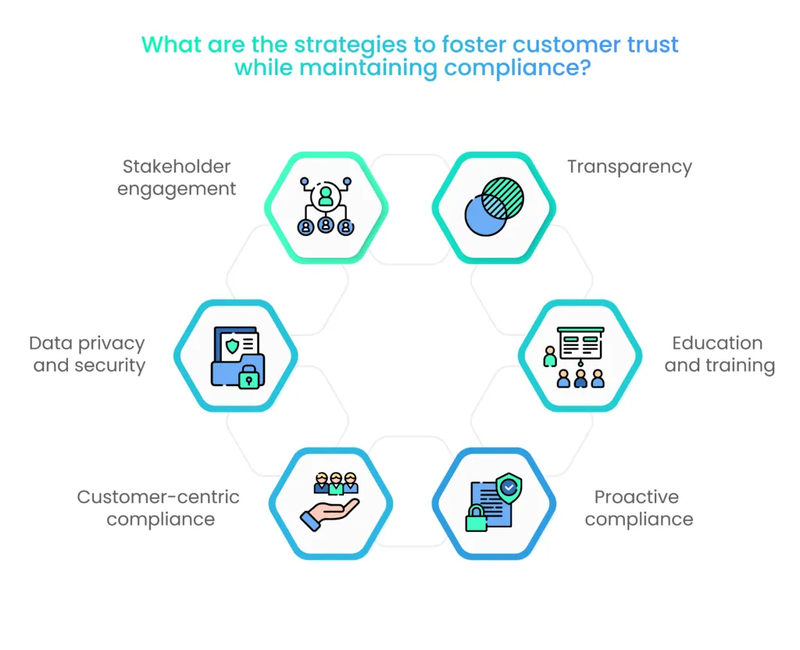
- Transparency as the Foundation
Modern customers don't just want companies to be compliant; they want to see the compliance in action. This means:
- Clear Communication: Explaining compliance measures in plain language, not legal jargon
- Regular Updates: Keeping customers informed about new protections and improvements
- Open Reporting: Publishing compliance reports and audit results
- Proactive Protection Over Reactive Response
Trust-building companies don't wait for regulations to force their hand. They anticipate customer needs and regulatory trends:
- Implementing privacy protections before they're mandated
- Conducting regular security assessments
- Building compliance into product development from the start
- Making Compliance Customer-Centric
The most trusted companies frame compliance in terms of customer benefit, not business obligation. Instead of saying "We comply with GDPR," they say "We give you complete control over your personal data."
The Technology Advantage: How Modern Tools Enhance Trust
Today's compliance landscape is increasingly powered by technology that not only ensures adherence to regulations but also enhances the customer experience.
Automated Compliance Monitoring
Advanced monitoring systems can track compliance in real-time, catching issues before they impact customers. This proactive approach demonstrates a commitment to protection that customers notice and appreciate.
Privacy-Enhancing Technologies
Tools like differential privacy, homomorphic encryption, and zero-knowledge proofs allow companies to use customer data for business purposes while maintaining strict privacy protections, building trust through both utility and protection.
Customer Control Platforms
Self-service privacy portals that let customers view, modify, or delete their data are trust-building tools that give customers agency over their relationship with your brand.
Measuring the Trust Impact of Compliance
You can't manage what you don't measure. Companies serious about building customer trust through compliance need robust metrics:
Direct Trust Indicators
- Net Promoter Score (NPS): How likely customers are to recommend your brand
- Customer Satisfaction (CSAT): Direct feedback on customer experience
- Brand Trust Surveys: Specific measurements of trust levels
Behavioral Trust Indicators
- Customer Retention Rates: Trusted companies keep customers longer
- Cross-sell Success: Trust enables broader customer relationships
- Complaint Resolution Time: How quickly issues are addressed and resolved
Compliance-Specific Metrics
- Privacy Request Response Time: How quickly you handle data subject requests
- Incident Response Effectiveness: How well you manage and communicate breaches
- Audit Results: Third-party validation of your compliance efforts
Common Pitfalls: Where Companies Lose Trust Despite Compliance
Having a compliance program isn't enough, how you implement and communicate it makes all the difference.
The Communication Gap
Many companies achieve technical compliance but fail to communicate their efforts effectively. Customers can't trust what they don't understand. A study by the International Association of Privacy Professionals found that 67% of customers don't understand their rights under privacy laws, a massive opportunity for trust-building through education.
The Experience Disconnect
Compliance shouldn't create friction; it should enhance the customer experience. Companies that treat privacy controls as obstacles rather than features miss the trust-building opportunity. The best privacy implementations are so seamless that customers appreciate the protection without feeling burdened by the process.
The Response Test
How a company handles compliance failures often matters more than preventing them entirely. When Equifax suffered their massive data breach in 2017, the damage wasn't just from the incident itself, it was from their poor communication, delayed disclosure, and inadequate customer support that destroyed trust.
Industry-Specific Trust Considerations
Different industries face unique compliance challenges that directly impact customer trust:
Financial Services
Banking and fintech companies must navigate complex regulations while maintaining customer confidence in the security of their financial data. Success requires:
- Robust KYC (Know Your Customer) processes that feel protective, not invasive
- Clear communication about fraud protection measures
- Transparent fee structures and practices
Healthcare
Healthcare organizations handle the most sensitive personal data, making HIPAA compliance not just a legal requirement but a trust imperative:
- Patient control over health information sharing
- Secure communication channels
- Transparent data usage policies
E-commerce and Retail
Online retailers must balance personalization with privacy, creating compliance frameworks that:
- Give customers control over data collection
- Protect payment information
- Provide clear opt-out mechanisms
The Future of Trust-Based Compliance
The compliance landscape continues to evolve, and companies that want to maintain customer trust must stay ahead of the curve.
Emerging Regulations
New privacy laws are appearing globally, from California's CPRA to India's Personal Data Protection Bill. Companies that proactively adopt strong privacy practices will find regulatory compliance easier and customer trust higher.
AI and Algorithm Transparency
As artificial intelligence becomes more prevalent, customers increasingly want to understand how automated decisions affect them. Forward-thinking companies are implementing:
- Explainable AI systems
- Algorithm auditing processes
- Clear communication about automated decision-making
Sustainability Compliance
Environmental regulations and customer expectations around corporate responsibility are merging, creating new compliance requirements that directly impact trust.
Building Your Trust-First Compliance Strategy
Creating a compliance program that builds customer trust requires intentional design:
Step 1: Audit Your Current State
- Assess existing compliance measures
- Identify gaps between compliance and customer expectations
- Evaluate how well you communicate your protections
Step 2: Design for Trust
- Frame compliance initiatives in customer benefit terms
- Build customer control into every compliance process
- Create clear, accessible communication about your protections
Step 3: Measure and Iterate
- Track both compliance metrics and trust indicators
- Gather customer feedback on compliance experiences
- Continuously improve based on results
Step 4: Make It Cultural
- Train employees to see compliance as trust-building
- Reward behaviors that enhance customer trust
- Share success stories internally
The ROI of Trust: Making the Business Case
Investing in trust-building compliance is the most profitable thing to do. Companies with high customer trust scores see:
- 17% better performance than competitors
- 19% higher revenue growth
- 40% better employee retention
- 27% higher profitability
These numbers reflect the compound benefits of customer trust: loyal customers buy more, cost less to serve, and become advocates who drive organic growth.
Conclusion
In an era where products and services can be quickly commoditized, customer trust remains one of the few sustainable competitive advantages. Compliance, when done thoughtfully, becomes the foundation of this trust.
The companies that will thrive in the coming decades aren't those that view compliance as a necessary evil, but those that embrace it as a trust-building opportunity. They understand that every privacy protection, every security measure, and every transparent communication is an investment in customer relationships that compound over time.
The choice is clear: companies can either treat compliance as a cost center focused on avoiding penalties, or they can transform it into a profit center that builds unshakeable customer trust. In today's trust-scarce environment, that choice might just determine who survives and who thrives.
Remember, customer trust isn't built overnight, but it can be destroyed in an instant. The companies that consistently invest in trust-building compliance practices are the ones that will earn the privilege of long-term customer relationships in our increasingly connected and regulated world.
Ready to earn lasting loyalty? Discover how compliance drives customer trust and business growth. Book a demo with Regulance now to learn more.